Dichotomies / Architecture, Furniture, Photographies, Sculptures
Spatial Piece Tobira: the Door, with Photograph Trees Have Their Own Stories as Well
空間什器 扉、併せて、樹木の対談
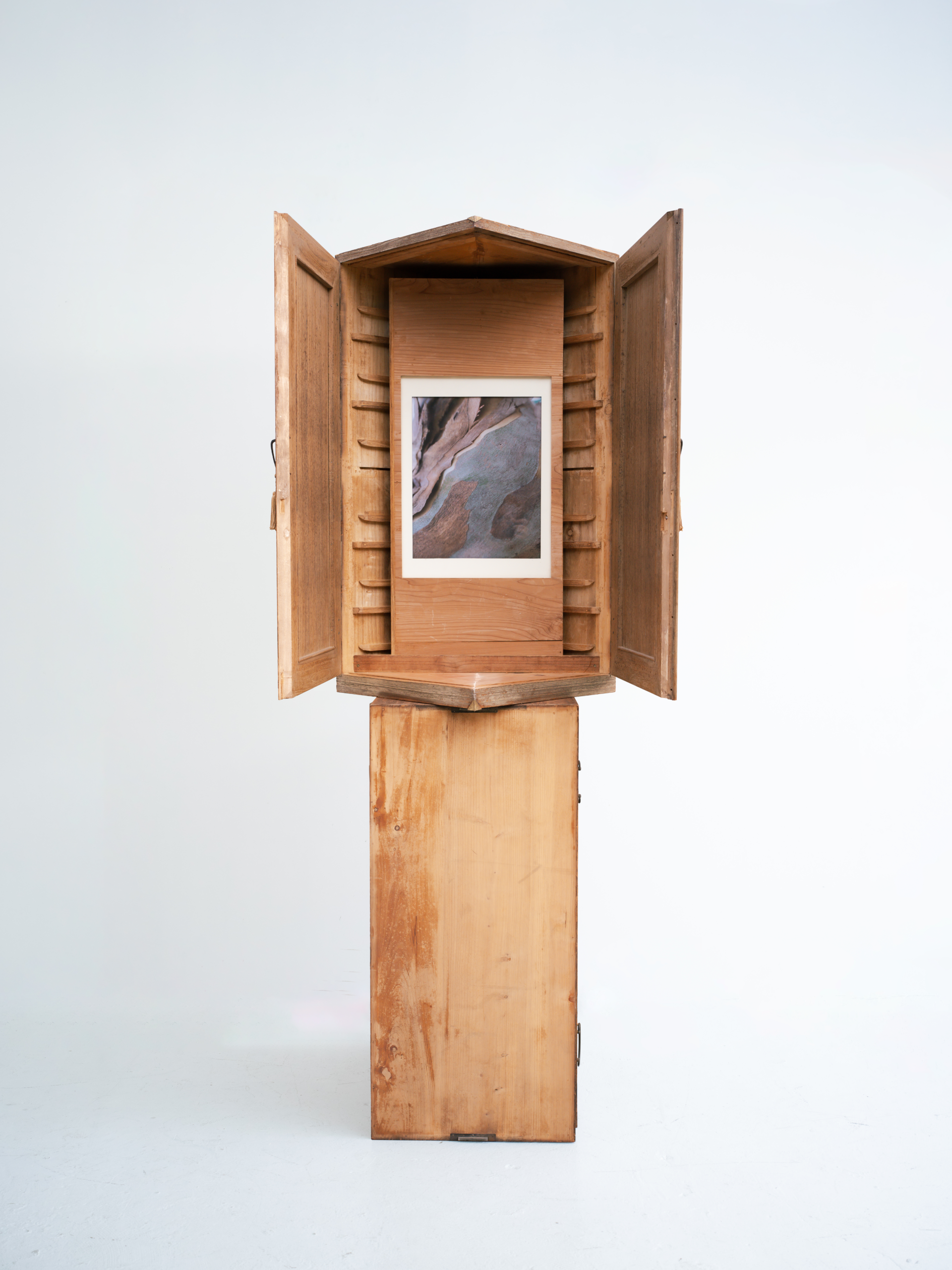
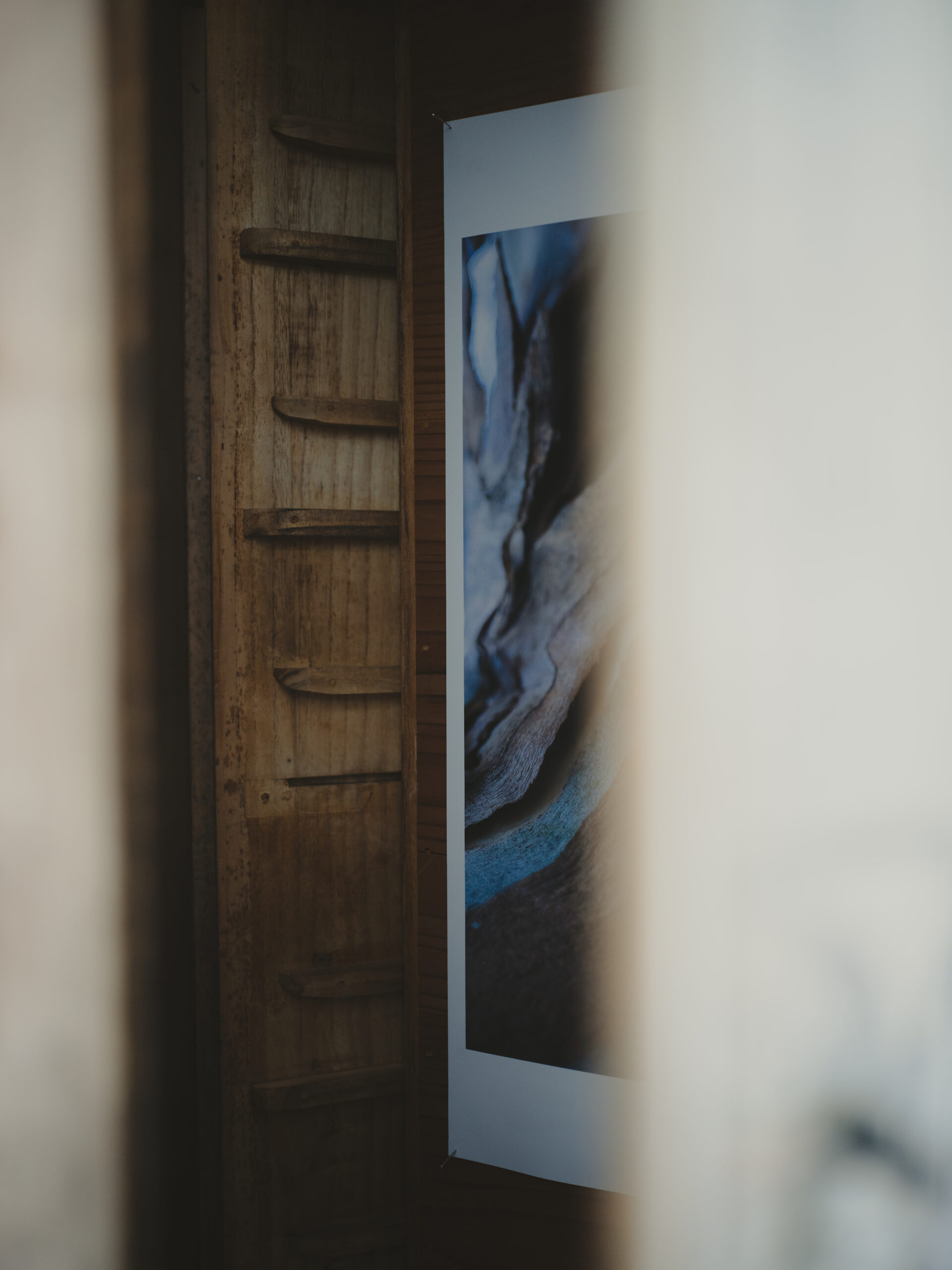
This is an artwork that renovates a paulownia chest using mokume-gane, incorporating photographs of trees exposed to radiation.
- Date
- June 2024
- Size
- 930 × 610 × 610 mm
- Materials
- Paulownia, Mokume-gane, acrylic sheet, photographic paper
- Directors
- Chisako Suzuki, Arata Suzuki, Asuka Hoshi
- Craftsman
- Asuka Hoshi
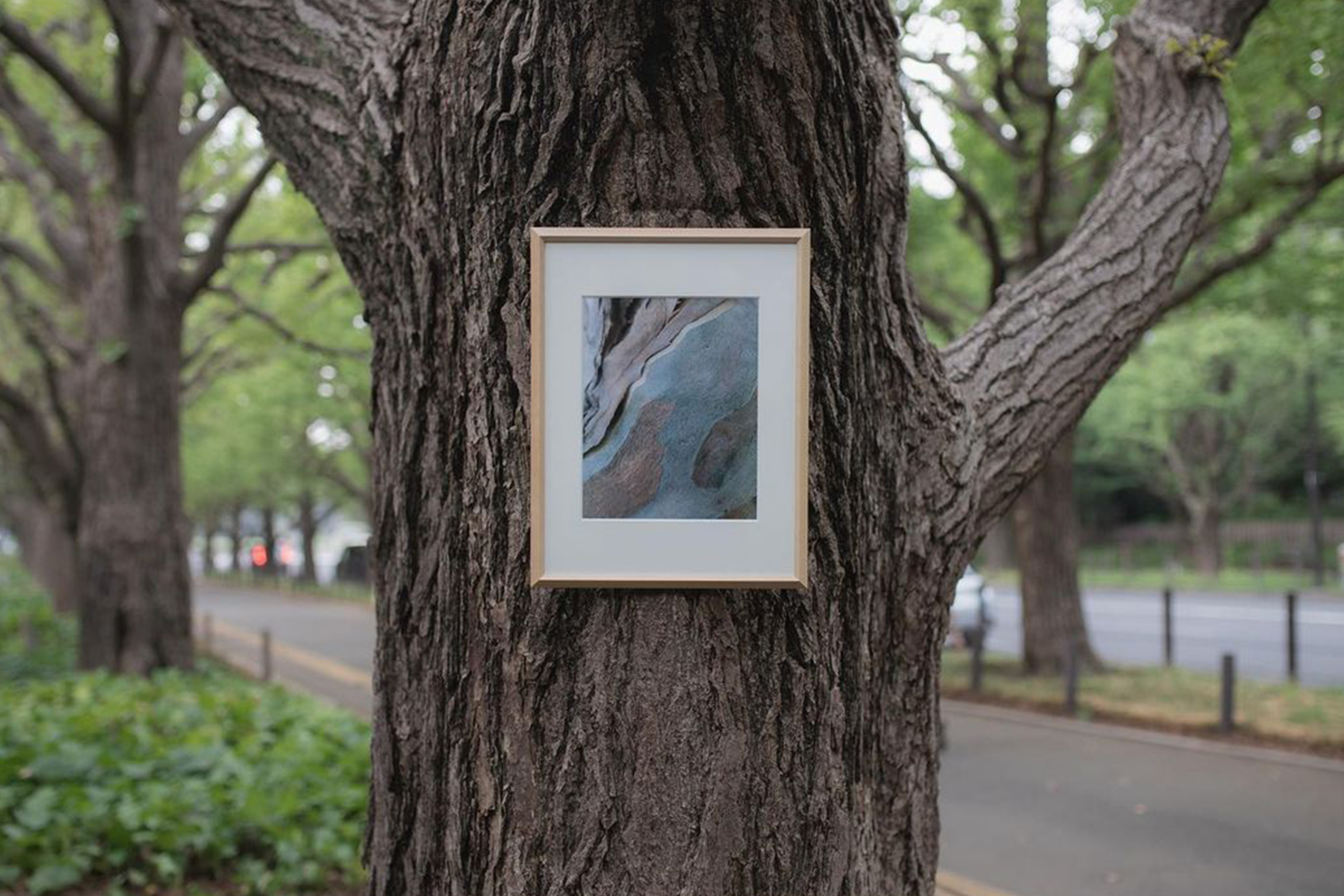
Recovering the original landscape does not mean cutting out only the good aspects of a society. Traces of conflict and destructive legacies are significant as part of the original landscape so that society does not repeat the same mistakes. The photographs of bark in this piece were taken of trees in Hiroshima that were exposed to radiation from the atomic bombs of World War II. The trees have survived the horrors of war and the nuclear bombing and are growing strong and resilient despite the damage. These trees gave the people of Hiroshima the courage to live and hope for recovery. And as the only remaining A-bombed trees in Japan, they will live on to help realise a world without nuclear weapons.
The wooden box accompanying the photo is a renovated paulownia chest that was handed down to us. Paulownia wood was not only resistant to fire and water but was also ideal for protecting valuables from humidity in Japan's uniquely hot and humid climate. Also, as they are light and easy to carry, paulownia chests of drawers were valued as wedding gifts from the Edo period onwards. There was even a custom of planting a paulownia tree when a girl was born and making a chest of drawers from it when she married. Furthermore, we can scrape off the surface of paulownia wood to regenerate beautifully; we can use it for future generations.
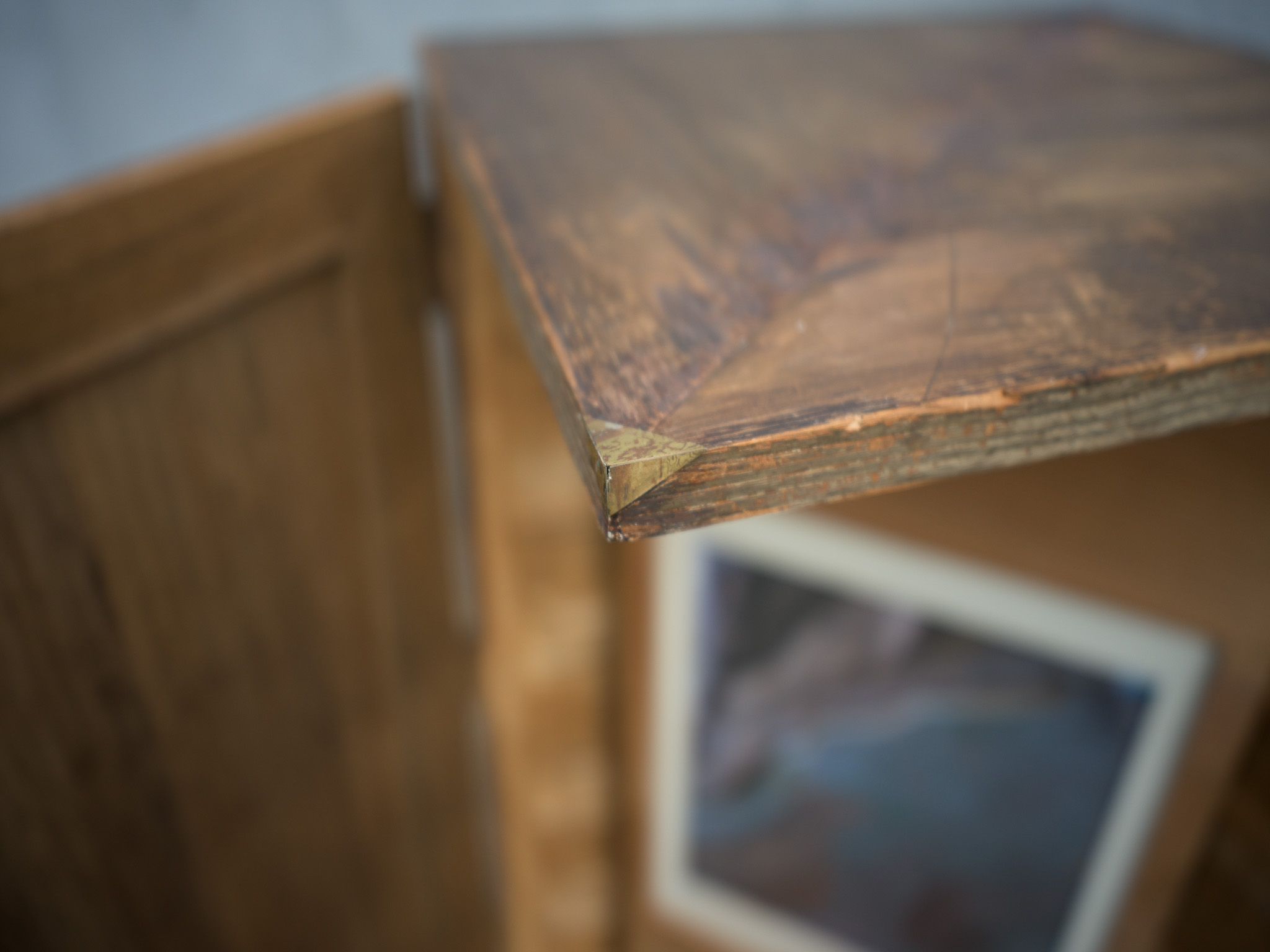
Mokume-gane seals the wounds of renewed Paulownia chests. Today, it is a wonderful craft, but it was initially a technique developed mainly to decorate swords.
Exposed trees are the last survivors of the atomic bomb, having survived the bombing despite being exposed to large amounts of radiation. On the other hand, Paulownia wood is grown with care in an optimum environment and is used carefully for many years after being sawn and processed, but its life as a tree has ceased. Mokume-gane is also a tree that people have imitated to achieve the beauty of the wood. A tree that meets with misery but continues to live, a tree that is treated with respect throughout its life but is dying out, and a tree that humans developed for weapons but is now trying to become pure. Through a dialogue between the three opposing parties, the exhibition explores the original landscape's nature in places with an adverse history.
When a tree is living, a human being is living as well. When a tree is cut, a human being is killed.
「原風景を取り戻す」 ことは、 社会の良い面だけを切り取ることではありません。 争いの痕跡や悪しき遺産は、 社会が同じ過ちを繰り返さないためにも、 原風景の一部として非常に重要です。 この作品に納められている樹皮の写真は、 第二次世界大戦の原爆で被曝した広島の被曝樹を撮影したものです。 戦争、 原爆の惨禍をくぐりぬけ、 傷つきながらもたくましく成長する樹々。 この樹々たちは広島の人たちに生きる勇気や復興に向けた希望を与えたそうです。 そしてこれからも日本に残る被爆樹として、 核兵器がない世界の実現に向けて生き抜くことでしょう。
その写真に寄り添う木箱は、 譲り受けた桐箪笥をリノベーションしたものです。 桐は、 火や水に強いだけでなく、 日本特有の高温多湿の気候風土で貴重品を湿気から護るのに最適でした。 また、 軽くて持ち運びも容易なため、 桐のタンスは江戸時代以降、 嫁入り道具としても重宝されました。 女の子が生まれると桐を植え、 結婚する際にその桐でタンスを作るという風習があったほどです。 さらに、 桐は表面を削ることにより綺麗に再生するため、 何世代にも渡って使い続けることができます。
刷新した桐箪笥の傷口を塞ぐのは、 杢目金です。 現在、 杢目金は工芸品として素晴らしい使われ方をされていますが、 元々は刀の装飾具として大成した技術でした。
被曝樹は、 大量の放射線を浴びながらも原爆を乗り越え、 今も尚、 最後の生存者として生きながらえている木です。 一方で、 桐材は最適な環境で手塩にかけて育てられ、 製材・ 加工されてから何年もの時間をかけて大切に使われますが、 木としての生命は途絶えているものです。 また、 杢目金は、 木の美しさを目指して人工的に模倣された木です。 悲惨な目に逢いながらも生き続ける木、 一生丁重に扱われながらも息絶えている木、 武器のために開発されたが今は清らかになろうとしている木。 相反する三者の対話を介して、 負の歴史があった場所における原風景の在り方を模索します。
木が生きることは、 人間が生きること。 木を切ることは、 人間を殺すこと。
Dichotomies / Architecture, Furniture, Photographies, Sculptures
Spatial Piece Tobira: the Door, with Photograph Trees Have Their Own Stories as Well
空間什器 扉、併せて、樹木の対談