Snippets / Architecture
Kairolith
カイロリス
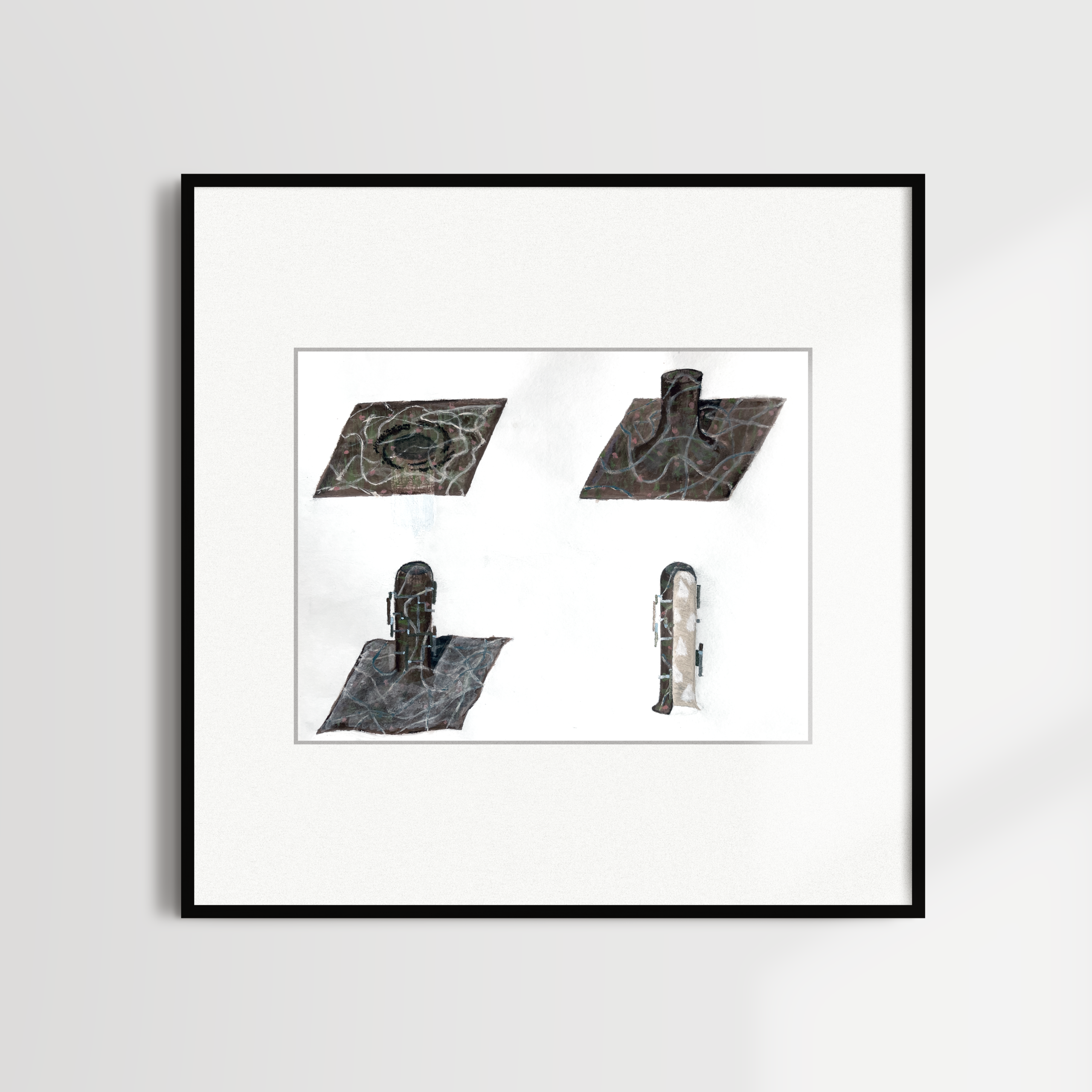
This is a design model created by delving into the primal landscape of the earth from the SNIPPETS.
- Date
- 2023 -
- Status
- Ongoing
- Location
- Everywhere on the earth
- Size
- Adjustable
- Directors
- Arata Suzuki, Asuka Hoshi
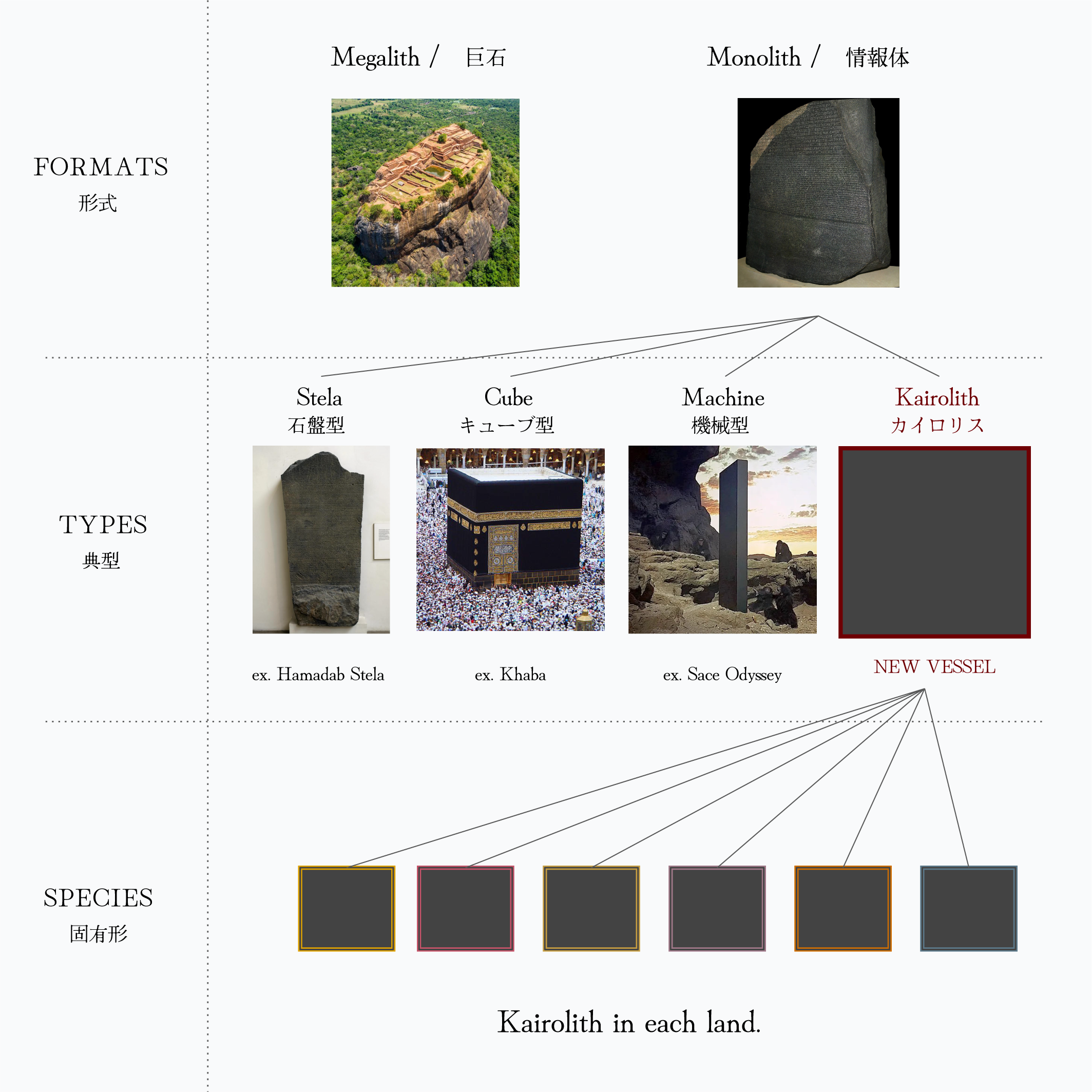
Since time immemorial, people have held a rich imagination towards megaliths. The stone circles of the British Isles and Sri Lanka's Sigiriya are emblematic examples. In Japan too, a custom existed of venerating abstractly shaped rocks called iwasaka as divine objects, which is said to be the origin of Shinto.
As civilisation progressed, writing was invented. Consequently, inscriptions began to be carved onto megaliths. It is from this moment that we consider the monolith to have been born, through the information imprinted upon the supernatural rock. The Rosetta Stone and the Code of Hammurabi are the most outstanding examples of this. Their flat, elongated shape and surfaces entirely covered in writing convey to us something beyond the information inscribed. However, the Hamadab Stele from the Kingdom of Kush (present-day Sudan) is particularly noteworthy. The Hamadab Stele consists of a lower section of rough, unworked rock, while its upper section is overwhelmingly covered in intricate hieroglyphs. One might say it harbours the mystical energy of the rock striving to become a monolith.
Thousands of years later, the advent of stone slab monoliths and the spread of books led to a decline in carving information onto stone. Books are portable and reproducible. Consequently, information and spiritual power became separated. However, for certain types of information, the loss of spiritual power was problematic. The most representative example of this is the sacred scripture. Many religions have supplemented this sacredness through art, such as religious paintings and idols. Islam, however, which forbids idols, could not express sacredness through such means. Therefore, it deliberately established a single sacred place in the world and made it obligatory to pray five times a day facing that direction. That sacred place is the Kaaba in Mecca. Since the information and spiritual power that a scripture should possess were divided between the Qur'an and the Kaaba, the Kaaba had to be a monolith. Ideally, a single black stone would have been preferred, but as the black stone was only about 30cm in size, the structure had to be built by stacking stones. Therefore, it is likely that the entire cube was covered with the Kiswa (black cloth), designed so that the black stone would not be visible. Religious cave architecture that evolved independently in remote regions, such as the cave churches of Ethiopia and the cave temples of Ellora, can also be regarded as transformed cube-shaped monoliths.
As time passed further, the Industrial Revolution brought the invention of machinery. Our forebears predicted that information too would accumulate within machines. The monolith appearing in Stanley Kubrick's 2001: A Space Odyssey embodied the monolith of such an era. For many people today, the first thing that springs to mind upon hearing the word “monolith” is surely that black, inorganic object. That monolith no longer holds information externally. Only upon contact does it impart knowledge. It could be described as the coldest monolith in human history.
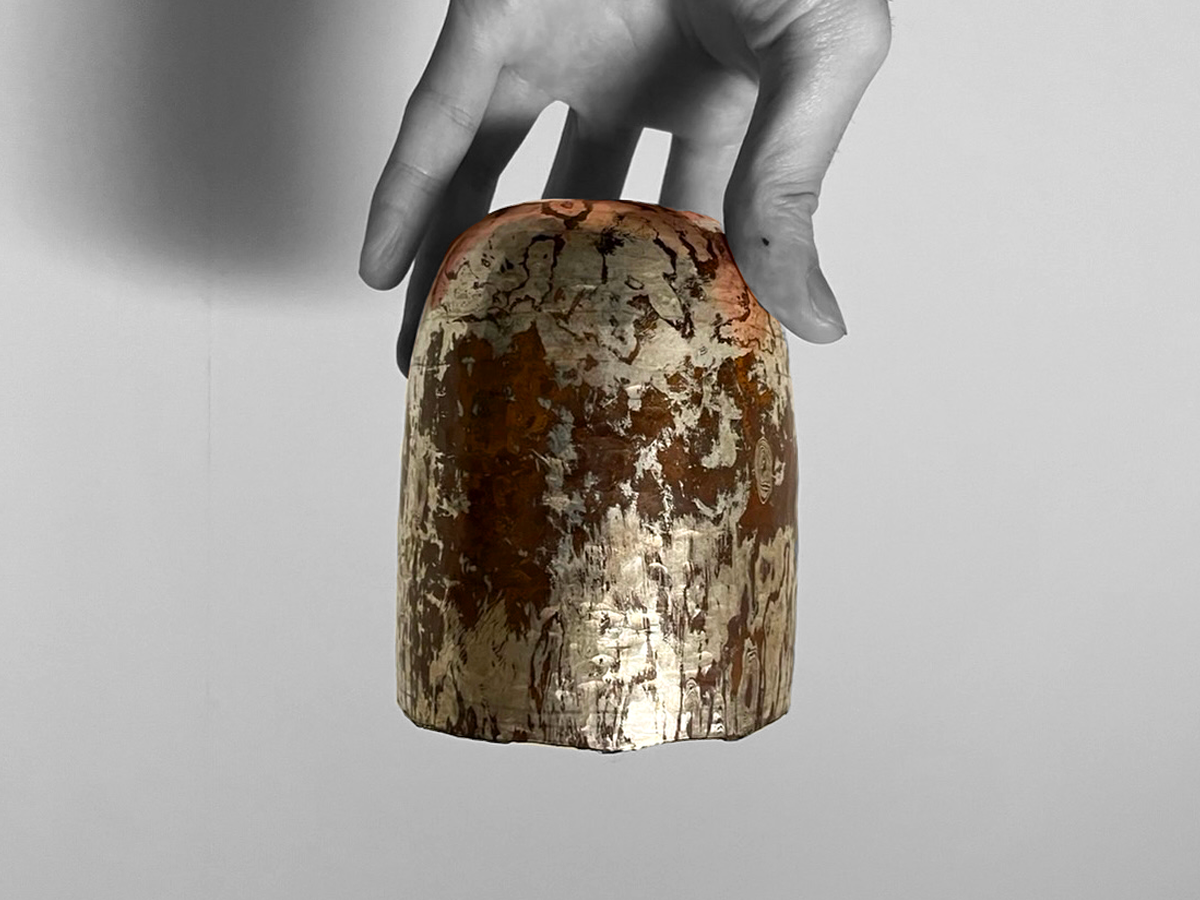
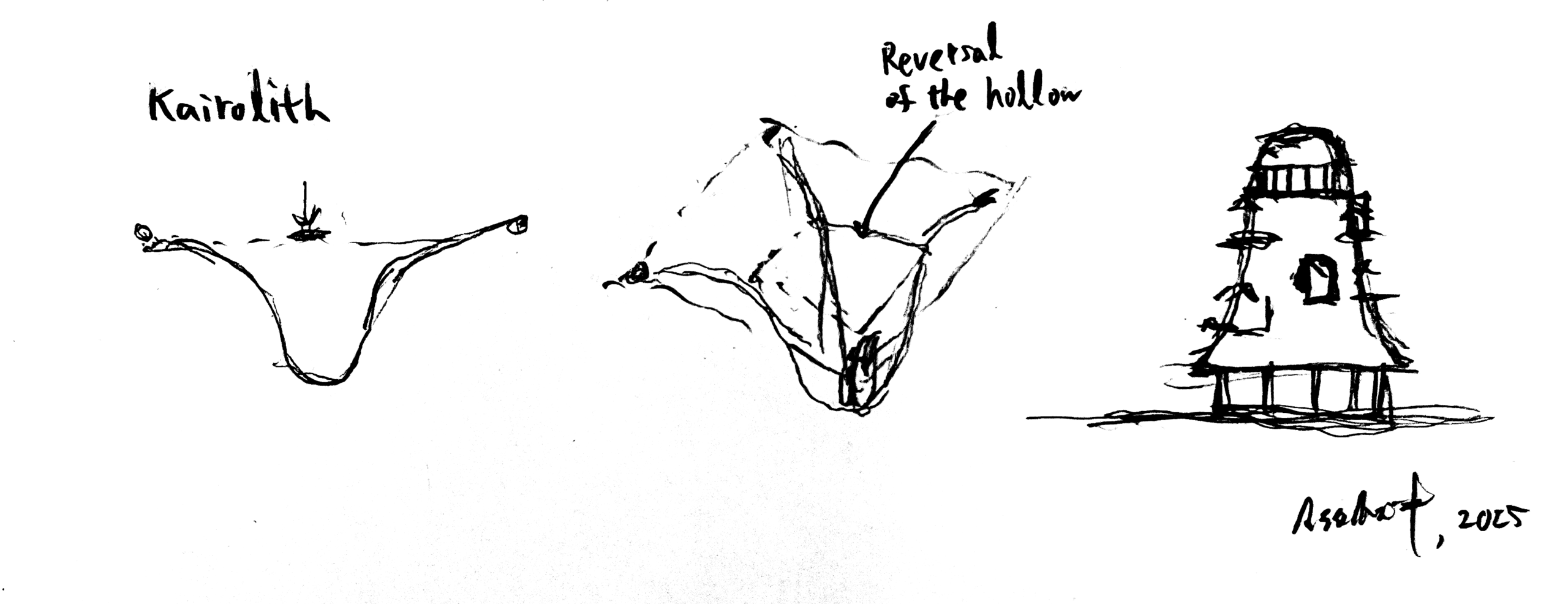
Today, vast quantities of information are accumulated within machines in the form of databases. What distinguishes this from stone tablet or cube-shaped information is the layering of time, spanning from past to present. This means it is possible to embody information possessing the concept of time as a monolith. We believe there is a growing need for monoliths that allow us to perceive this three-dimensional information more intuitively. We have named this the Kairolith (Kairo (time) + lith (stone)). It is a three-dimensional vessel for information that characterises a specific point through physical conditions, around which various interconnected phenomena gather magnetically. This is the most lucid embodiment of hypercontextualism.
【 Method of Contextual Reception 】
1. Create an aggregate by mixing together, as comprehensively as possible, the primordial elements generating the site's context (soil, stone, plants, etc.) and analogous materials (gravel, straw, fibres, etc.).
2. Layer man-made materials influenced by these contextual elements (iron, fabric, chemicals, etc.) in frequently occurring forms, following the textures manifested on the aggregate's surface.
文明以前より人々は巨石に対して豊かな想像力を抱いてきました。 ブリテン諸島の巨石群やスリランカのシギリヤは、 その象徴的な存在です。 そして、 日本においても、 磐座と呼ばれる抽象的な造形の岩を御神体として信仰する風習が存在し、 これが神道の起源であるとも言われています。
文明が進展すると、 文字が発明されました。 それにより、 巨石にも文字が刻まれるようになりました。 この瞬間から、 超自然的な岩石に加えられた情報によって、 モノリスが誕生したと考えています。 ロゼッタストーンやハンムラビ法典は、 その最も優れた作品です。 平らで縦長の形状と、 文字で埋め尽くされた全体は、 私たちに刻まれた情報以上のものを伝えてくれます。 しかし、 特筆すべきは、 クシュ王国 (現在のスーダン) のハマダブ石碑です。 ハマダブ石碑は、 荒々しい無加工の岩石が下部に残り、 細かなヒエログリフで圧倒的に覆われた上部から構成されています。 その岩石がモノリスへとなろうとする神秘的なエネルギーが、 そこには宿っていると言えるでしょう。
石板型モノリスの出現から数千年後、、 本の普及により、 情報を石に刻むことは減少しました。 本は持ち運びが容易で複製も可能な存在です。 それによって、 情報と霊力は切り離されていきました。 しかし、 一部の情報では、 霊力の喪失は問題でした。 その代表的なものが、 聖典です。 多くの宗教は、 宗教画や偶像などの美術によって、 その神聖さを補ってきました。 しかし、 偶像を禁じるイスラームでは、 そうした手段で神聖さを表現することはできませんでした。 そのため、 世界にただ一つの聖なる場所を設け、 その方角に向かって一日に5回の祈りを行うことを義務づけました。 その聖なる場所が、 メッカにあるカアバ神殿です。 聖典が持つべき情報と霊力を、 コーランとカアバ神殿に分けたため カアバ神殿はモノリスでなければなりませんでした。 本来ならば、 一枚の黒い石が望ましいと考えられていましたが、 黒い石は30cm程度しかなく、 建物を石で積み上げるしかありませんでした。 そこで、 キスワ (黒い布) でキューブ全体を覆い、 黒い石が見えなくなるようなデザインにしたのではないでしょうか。 エチオピアの石窟教会やエローラの石窟寺院など、 辺境の地で独自の進化を遂げた石窟の宗教建築も、 変形されたキューブ型モノリスと見なすことができるでしょう。
さらに時が経ち、 産業革命によって機械が発明されました。 先人たちは情報も機械の中に集積されるだろうと予測しました。 そのような時代のモノリスを具現化したのが、 スタンリー・キューブリックの 『2001年宇宙の旅』 に登場するモノリスです。 現代の多くの人々が、 モノリスと聞いてまず思い浮かべるのは、 あの黒く無機質な物体ではないでしょうか。 そのモノリスには、 もはや外部に情報は持たれていません。 それに触れた時にのみ何かが教示されるのです。 人類史上、 最も冷たいモノリスと言えるでしょう。
現在では、 膨大な量の情報がデータベースという形で機械の中に集積されています。 石板型やキューブ型の情報と異なるのは、 過去から現在までの時間の経過が重ねられているという点です。 つまり、 時間の概念を持つ情報をモノリスとして具現化することが可能です。 私たちは、 その立体的な情報を、 より直感的に感じることができるモノリスが求められていくと考えています。 私たちはそれを、Kairolith(カイロリス:Kairo(時間の)+ lith(石))と名付けました。ある特定の点を物理的な条件で特徴付け、 それに連鎖する様々な事象が磁力のように集まってくる立体的な情報の器です。 これこそが、 超文脈主義を最も明快に具現化したものです。
【 文脈の受容方法 】
1.
その地の文脈を発生させている初源的な要素 (土、 石、 植物など) と二次的な要素 (砂利、 藁、 系など) を可能な限り全て混ぜ合わせた集塊を作る。
2.
集塊の表面に発現したテクスチャに沿って、 それらの文脈の影響を受けた人為的な素材 (鉄、 布、 化学物質など) を頻用される形状で積層させる。
Snippets / Architecture
Kairolith
カイロリス