Snippets / Furniture, Installations, Sculptures
ARPA’s Institute of Synaesthesia
アルパの共感覚研究所
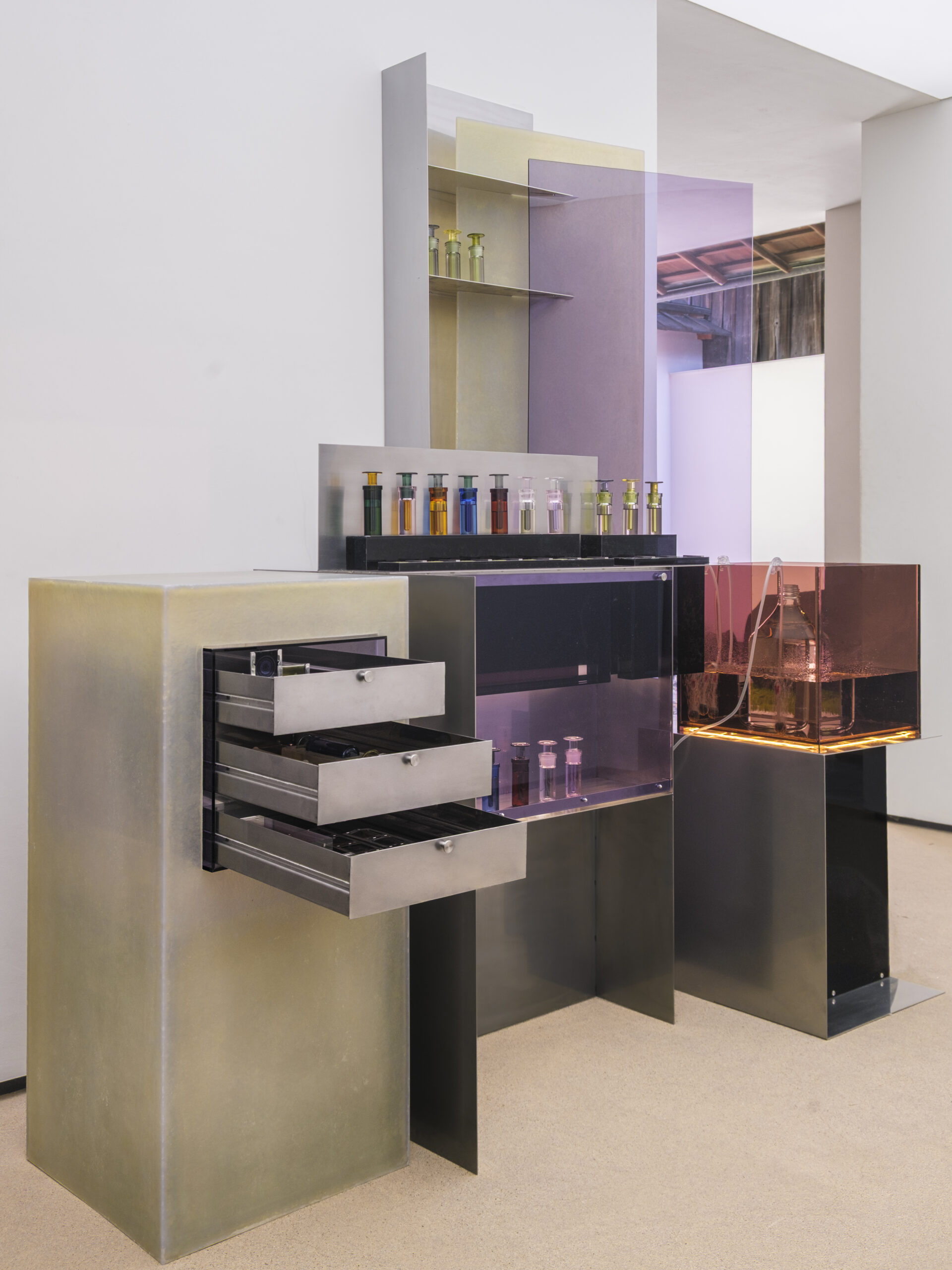
This is the design for an exhibition installation by Paris-based perfume brand ARPA.
- Date
- December 2025
- Location
- Kyoto, Japan
- Size
- 1950 × 1800 × 930 mm
- Materials
- Fibreglass, stainless steel, acrylic sheet
- Directors
- Arata Suzuki, Asuka Hoshi
- Collaborators
- Barnabé Fillion, Katarina Budin, Mathilde Audrain
- Client
- Arpa Studios
- Cooperation
- Riku Matsuzawa
- Craftsmen
- Okubo Kogei Co., Ltd. (fibreglass parts)
- Manufacturer
- Jonan Kogyo Co., Ltd. (stainless steel parts)
ARPA is a creative perfume brand founded by French perfumer Barnabé Fillion, creator of fragrances such as Aesop. As this marked their first exhibition in Japan, they selected Kyoto's Gion district as the venue. Consequently, two key objectives for this project were to incorporate both ARPA's and Kyoto's respective contexts, and to spatially convey ARPA's brand concept of Synaesthesia.
We began the design by tracing the contexts that constitute ARPA. Particular attention was paid to the fact that ARPA's inaugural exhibition was held at the Letty candle shop, designed by Hans Hollein.
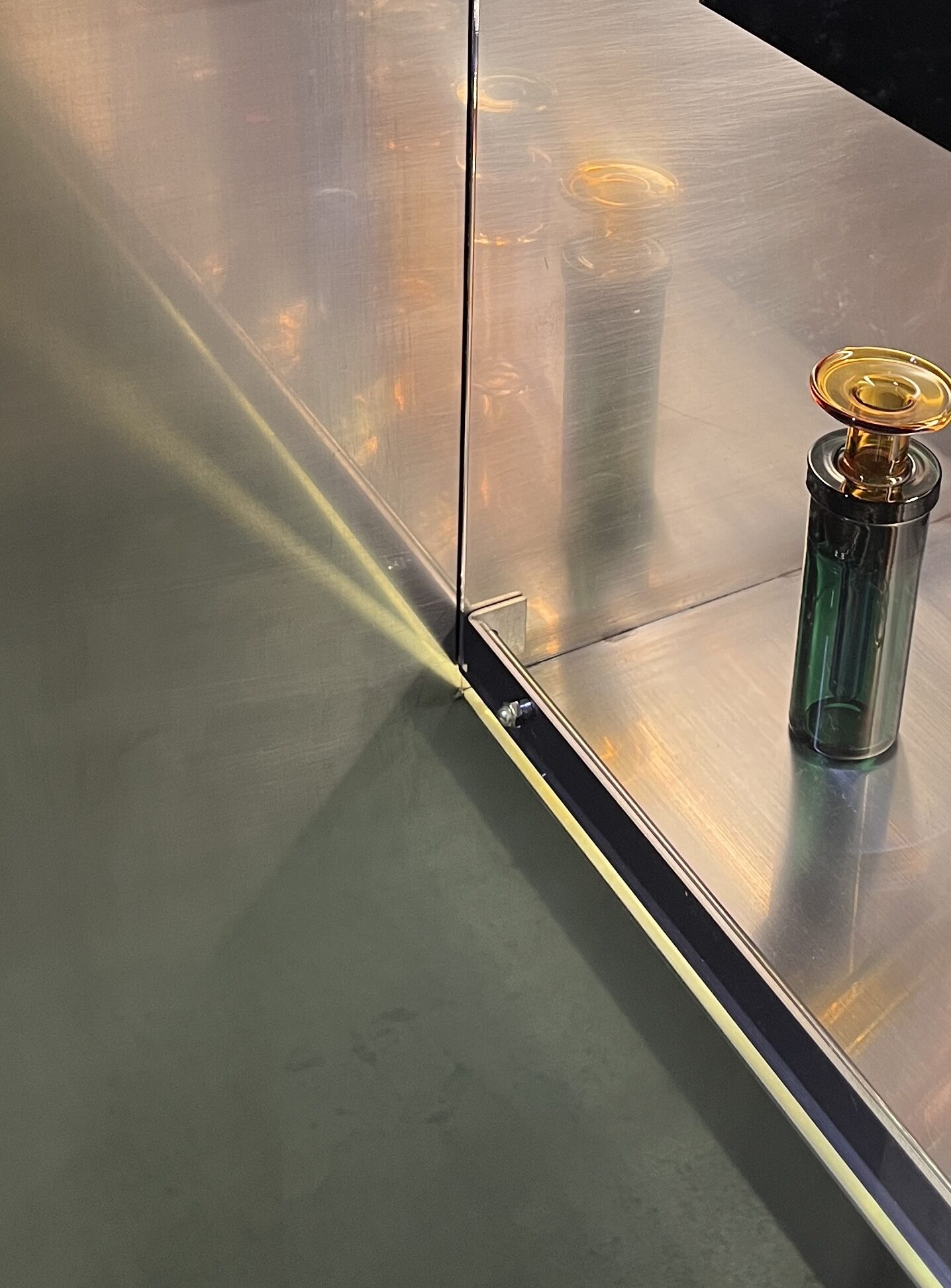
One of his innovations in this architecture was how ambiguous reflections between glossy materials caused the space's contours to shift as viewers moved, expanding the confines of this roughly 15-square-metre space. Thus, we decided to incorporate ARPA's context by responding to the interplay of real and illusory images, as seen in the Letti Candle Shop, through contemporary methods.
Next, we explored methods to generate “Synaesthesia” through the interplay of real and illusory images. Synaesthesia refers to the phenomenon where different senses react to each other – such as perceiving sound through a scent, or conversely, perceiving scent through sound. The composition of perfume scents provided a key insight here.
Perfume scents utilise differences in volatility, comprising three stages: the scent upon application (top note), the scent approximately one hour after application (middle note), and the scent after two hours or more (base note). Similarly, by layering materials with differing spatial characteristics across these three stages, the visual interplay between real and illusory forms stimulates memories of similar sensory overlaps in smell and sound, allowing the viewer to perceive scent and sound.
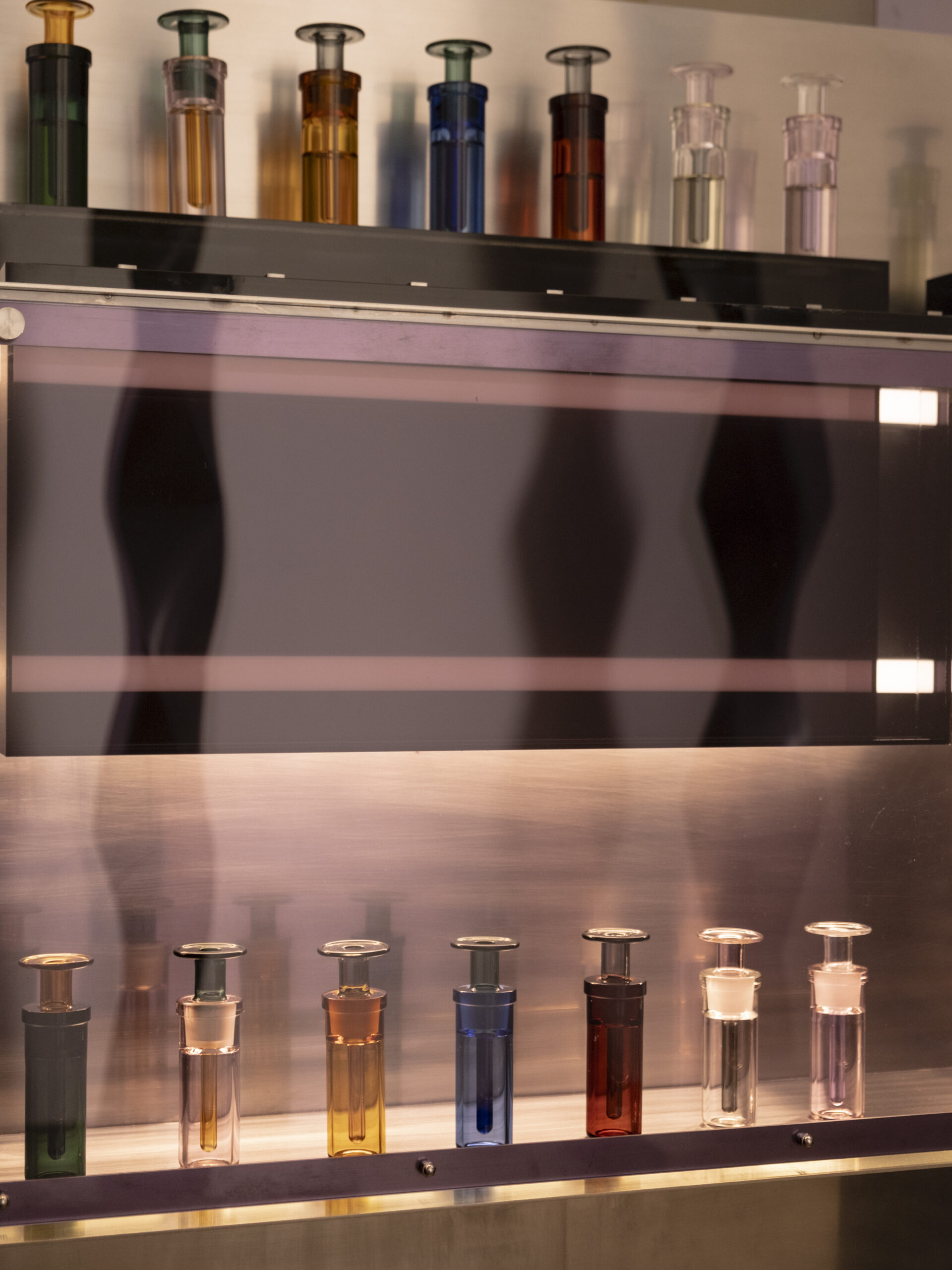
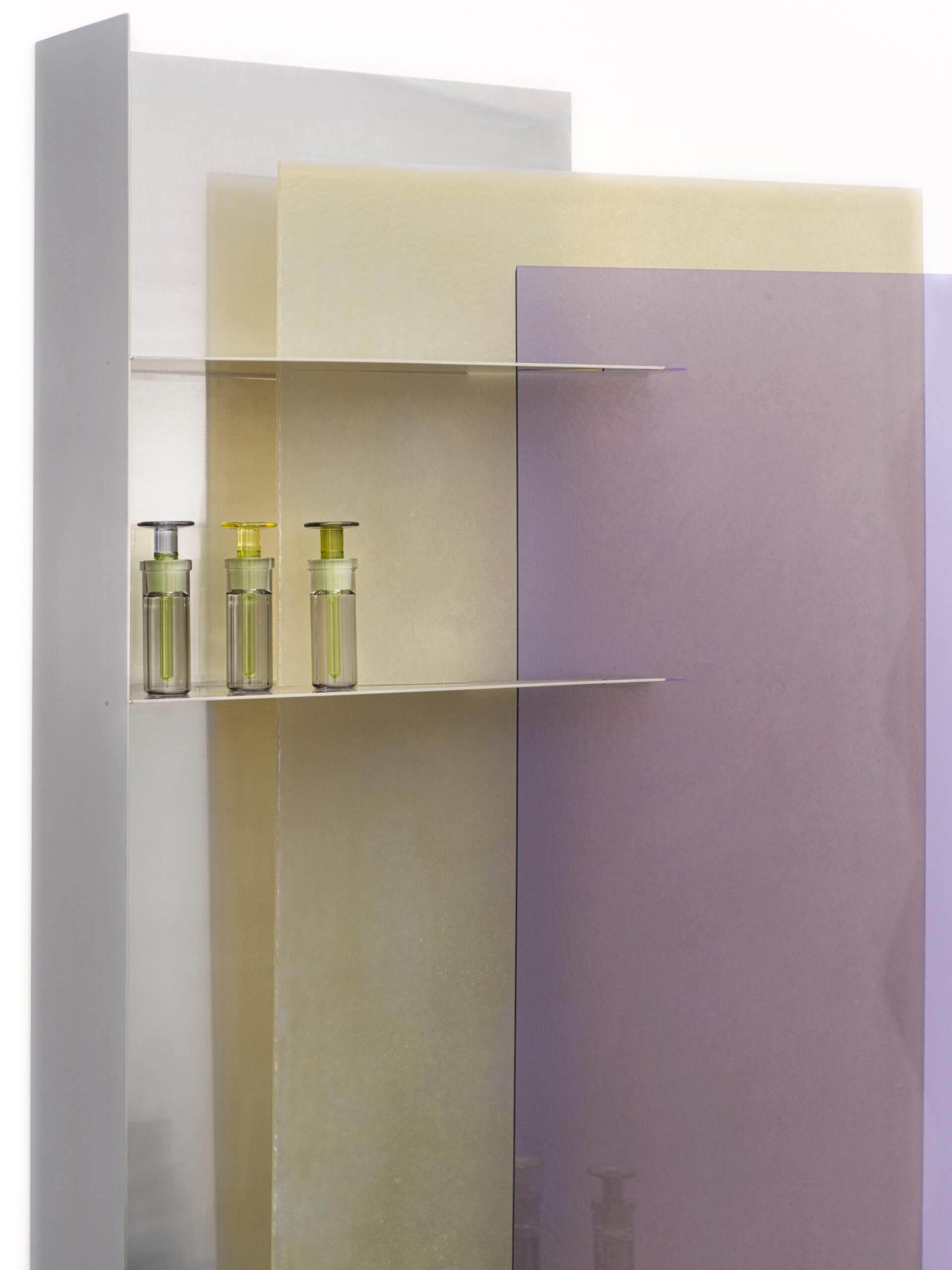
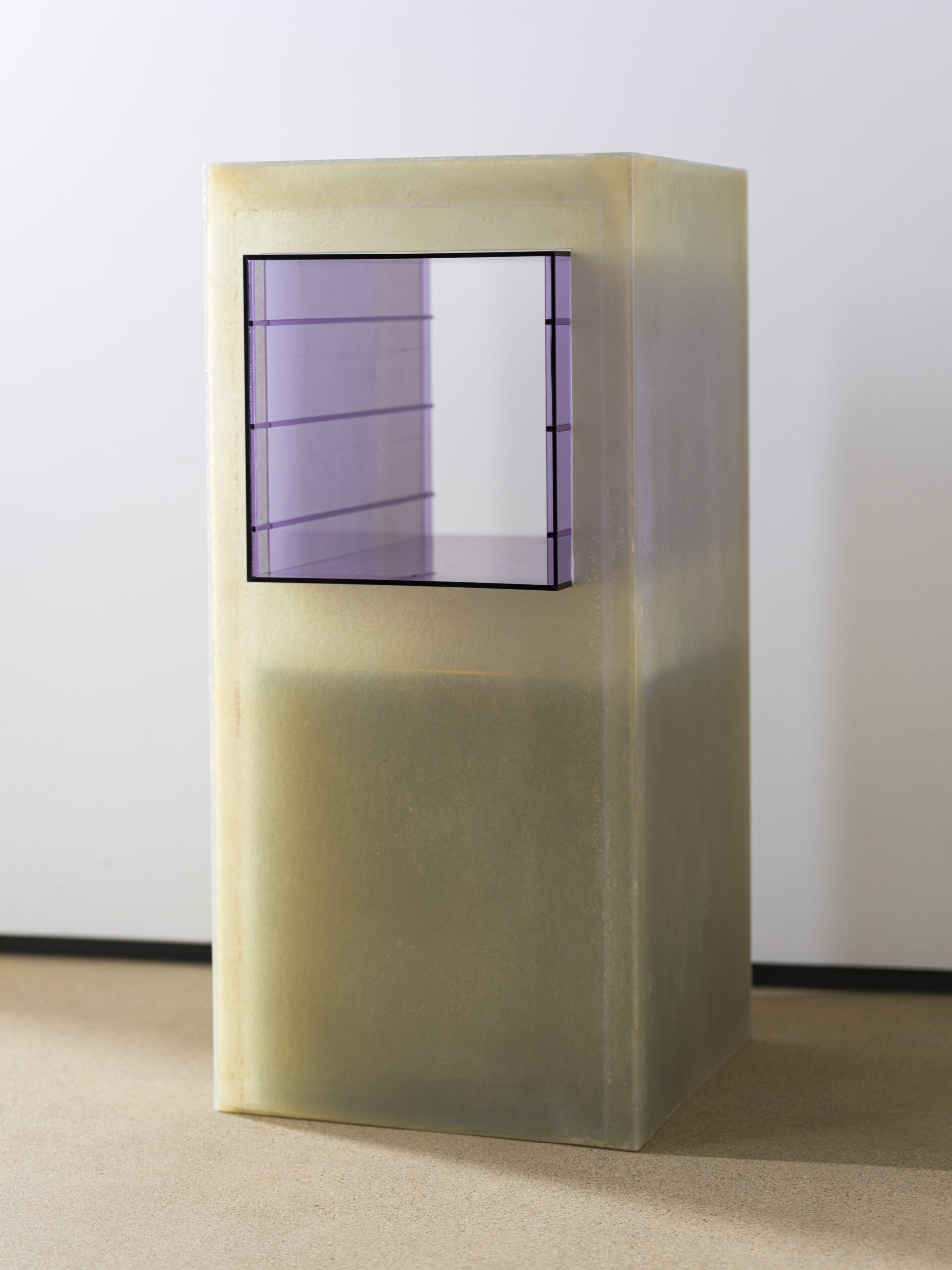
The optimal materials for the three types were: fully transparent, medium-reflectivity coloured acrylic; semi-transparent, low-reflectivity fibreglass; and non-transparent, high-reflectivity stainless steel.
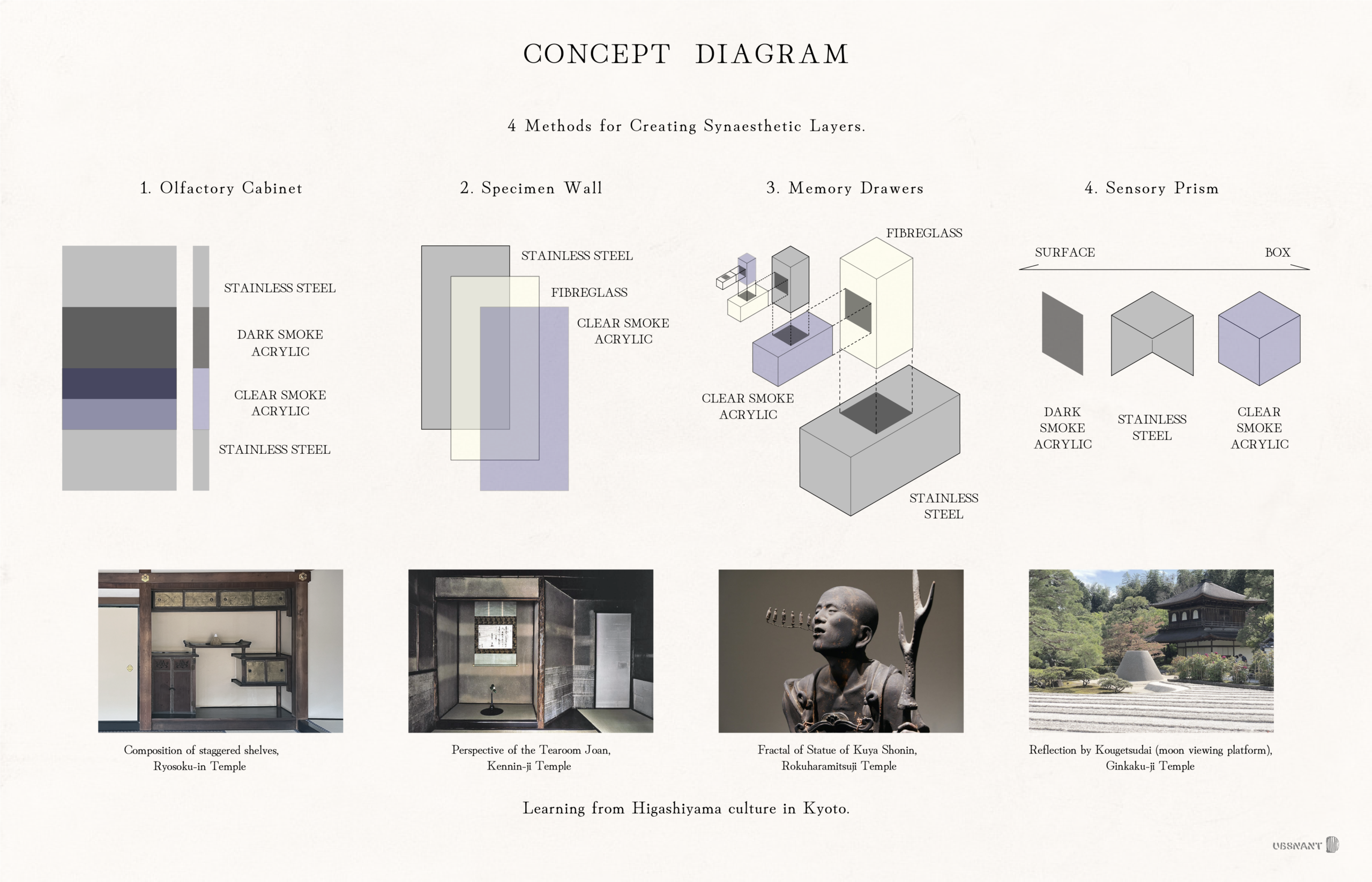
Finally, drawing inspiration from Kyoto's Higashiyama culture, several material layering approaches were explored. Consequently, the space was structured using four distinct pieces of furniture.
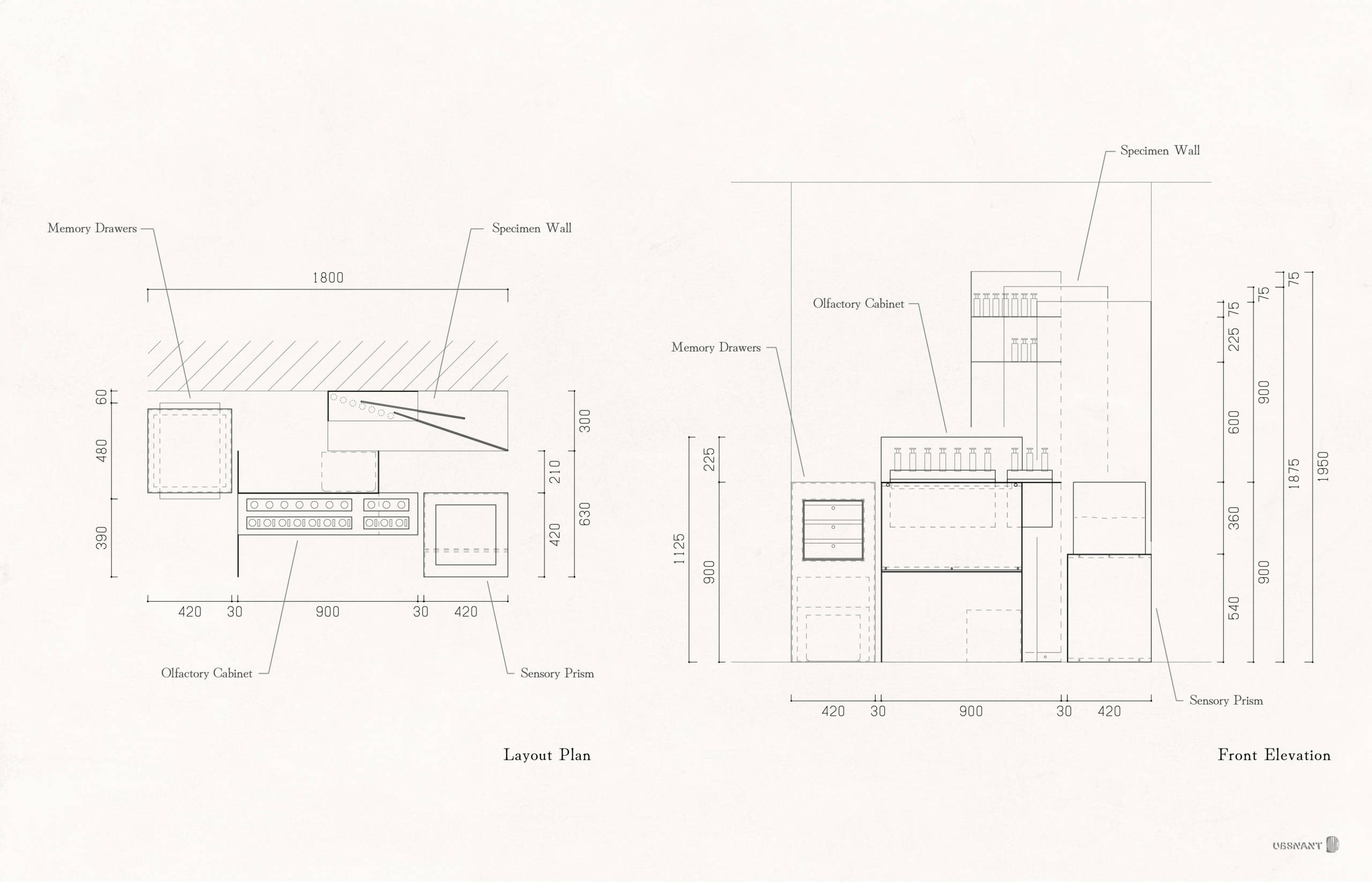
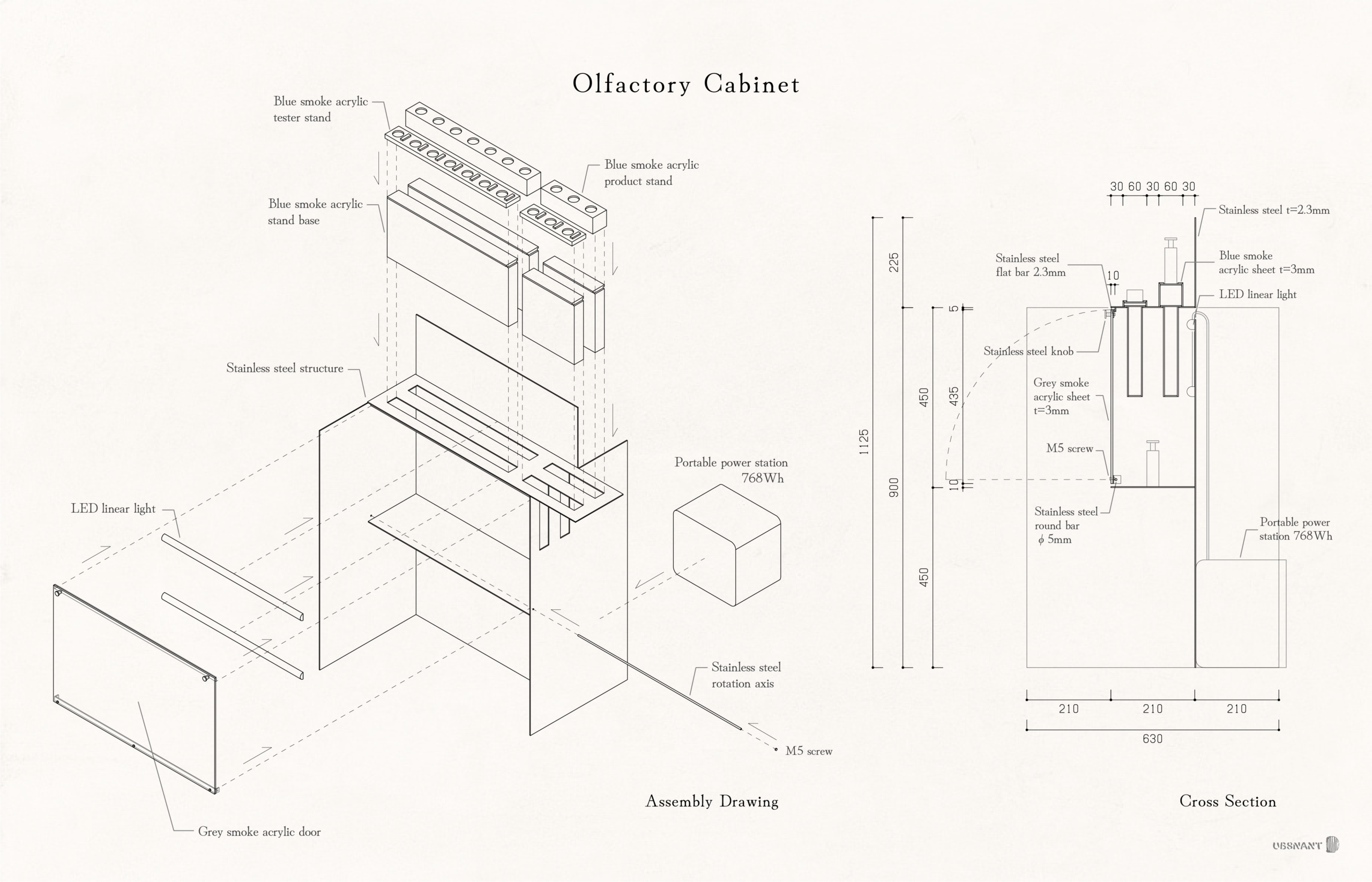
1. Olfactory Cabinet
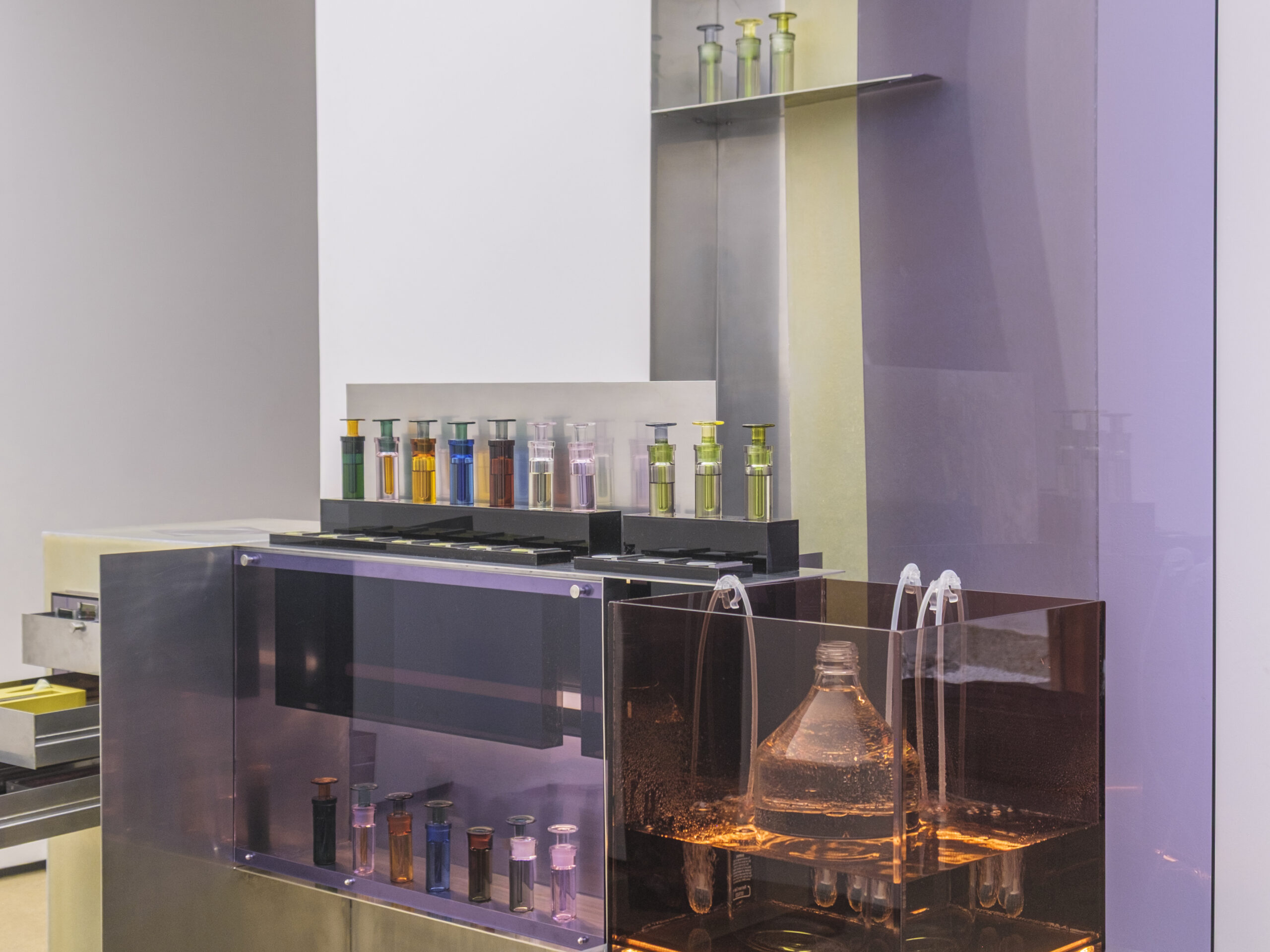
This is the main piece for displaying Arpa products. Drawing inspiration from the chigaidana (staggered shelves), the three materials appear vertically layered when viewed from the front, visualising the sequence of the product's scents.
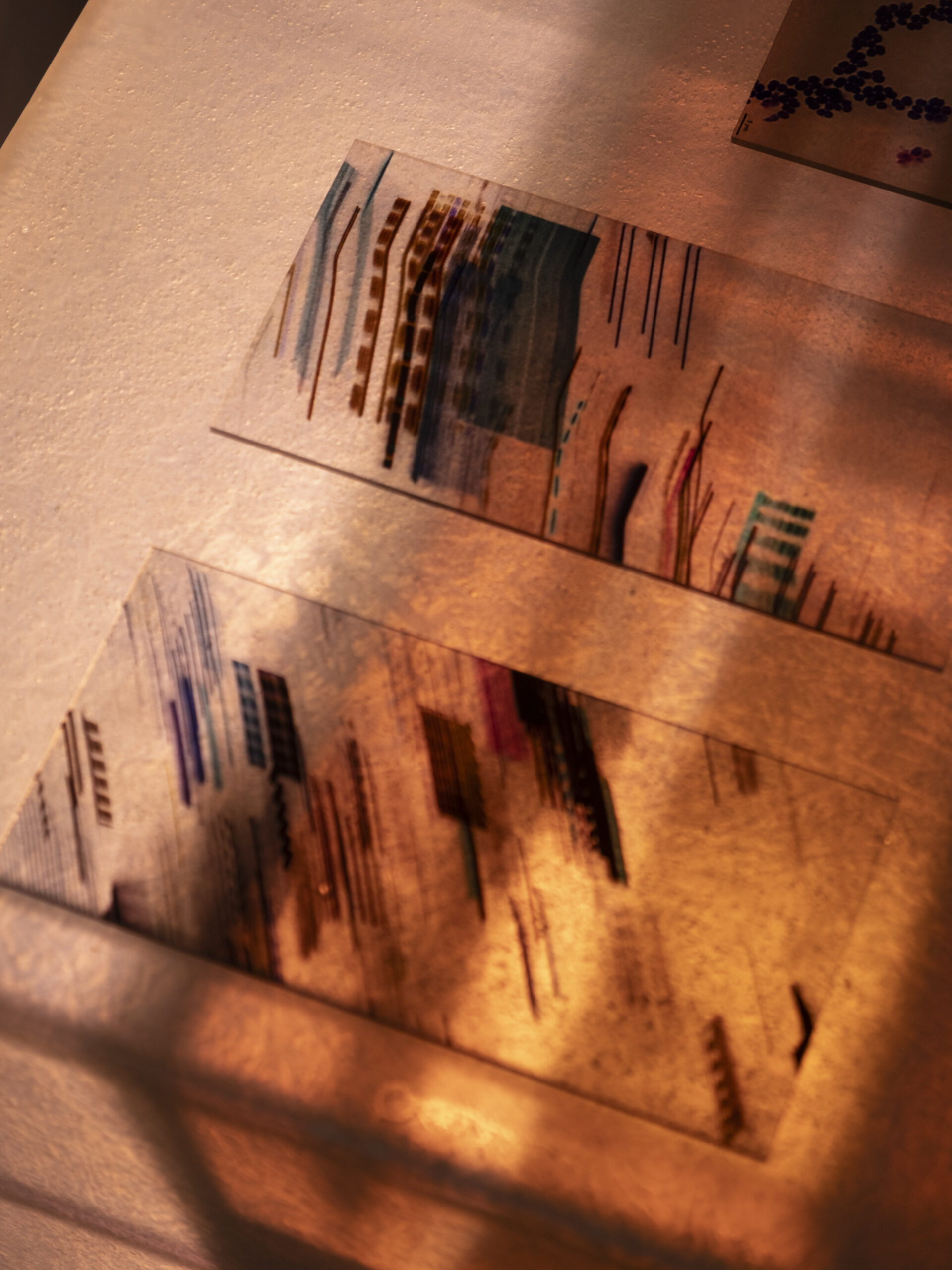
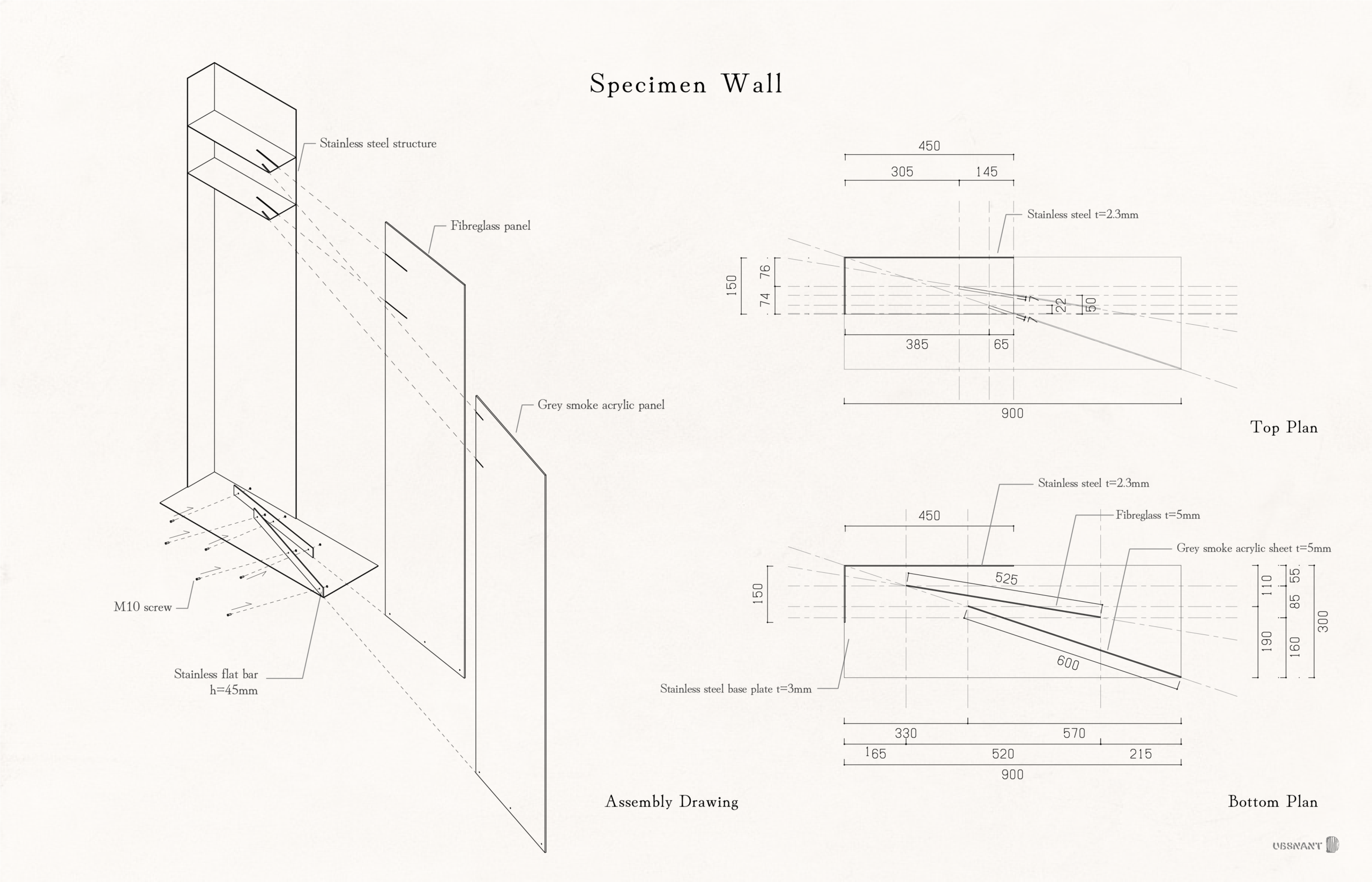
2. Specimen Wall
This is a piece functioning as a material sample. Referencing the diagonal enclosures of the Joan tea house, panels of three materials are arranged from front to back in order of transparency. This creates spatial depth, making the limited exhibition space appear larger and more abundant.
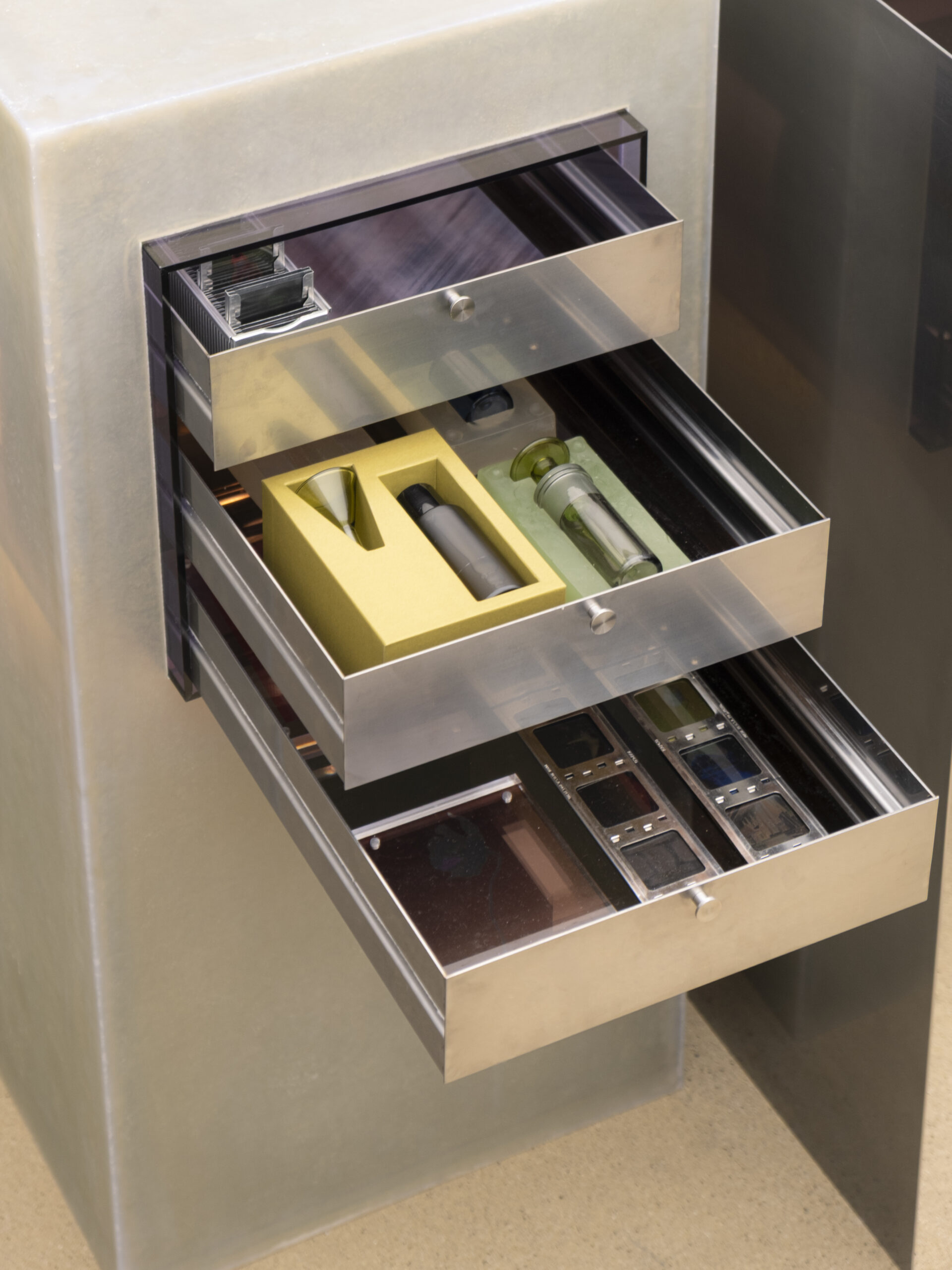
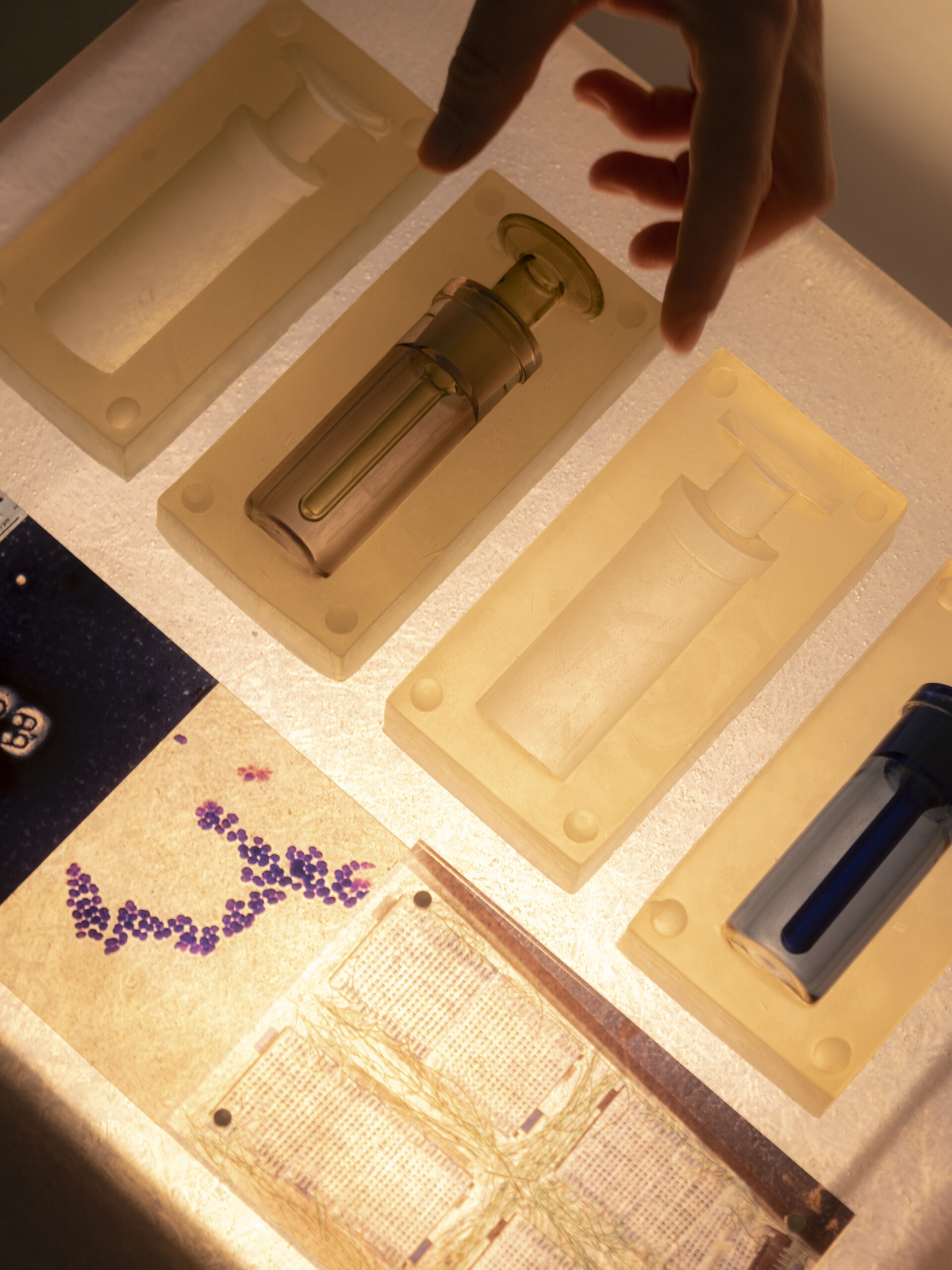
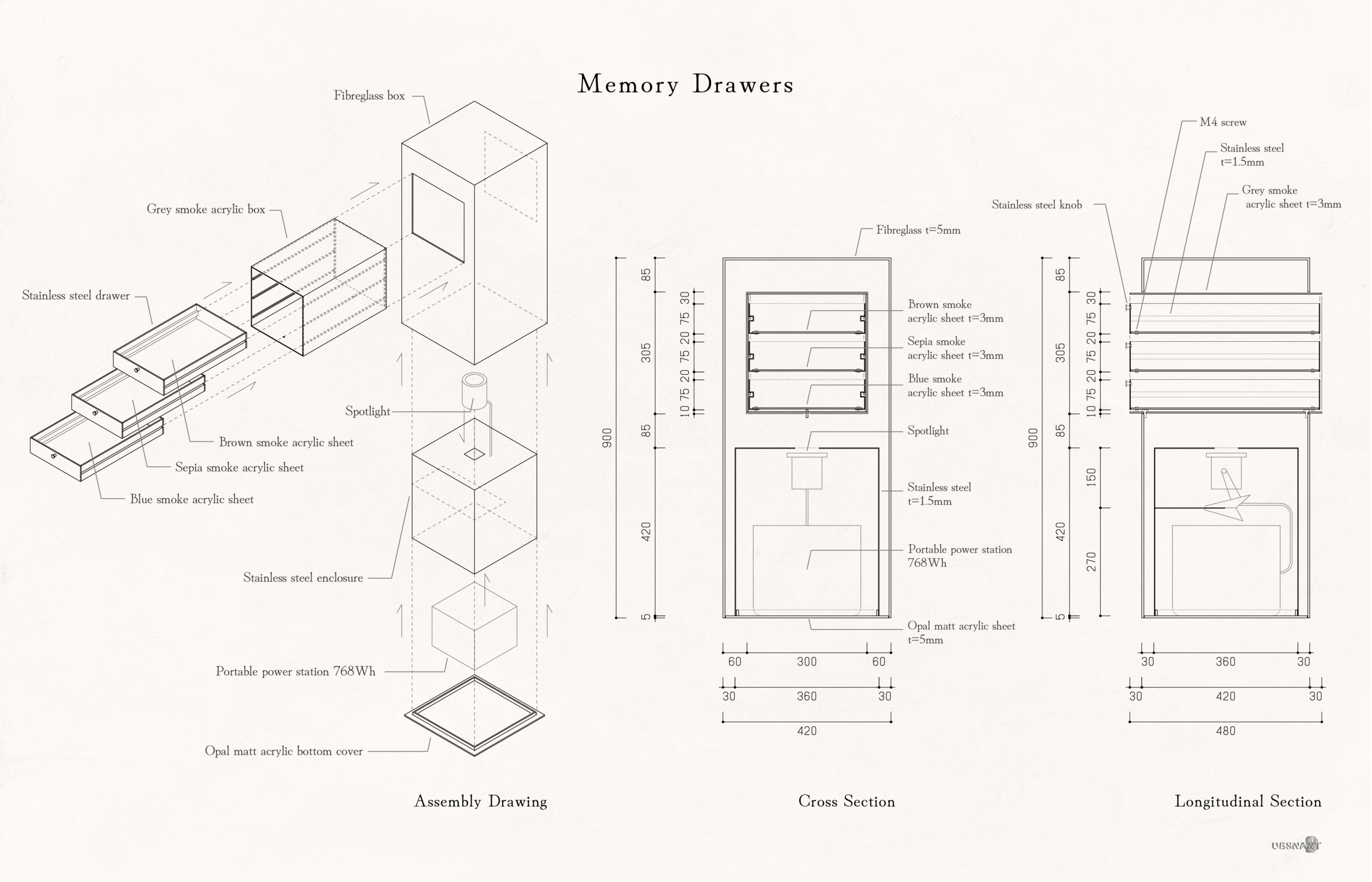
3. Memory Drawers
This piece displays Arpa's records through various items. Referencing staircases with drawers, square-sectioned boxes made from three materials interlock, creating a gradient effect when illuminated from below.
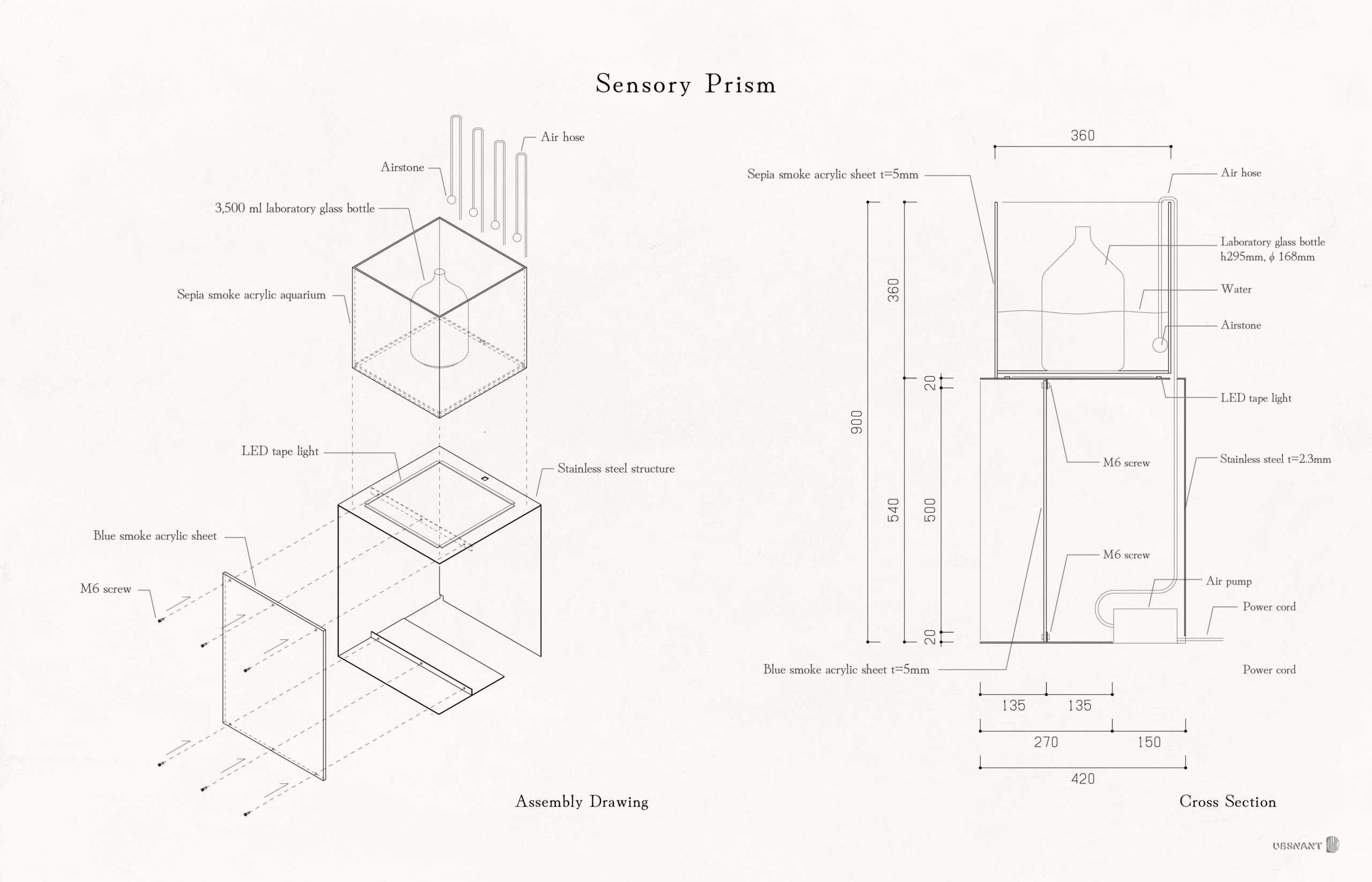
4. Sensory Prism
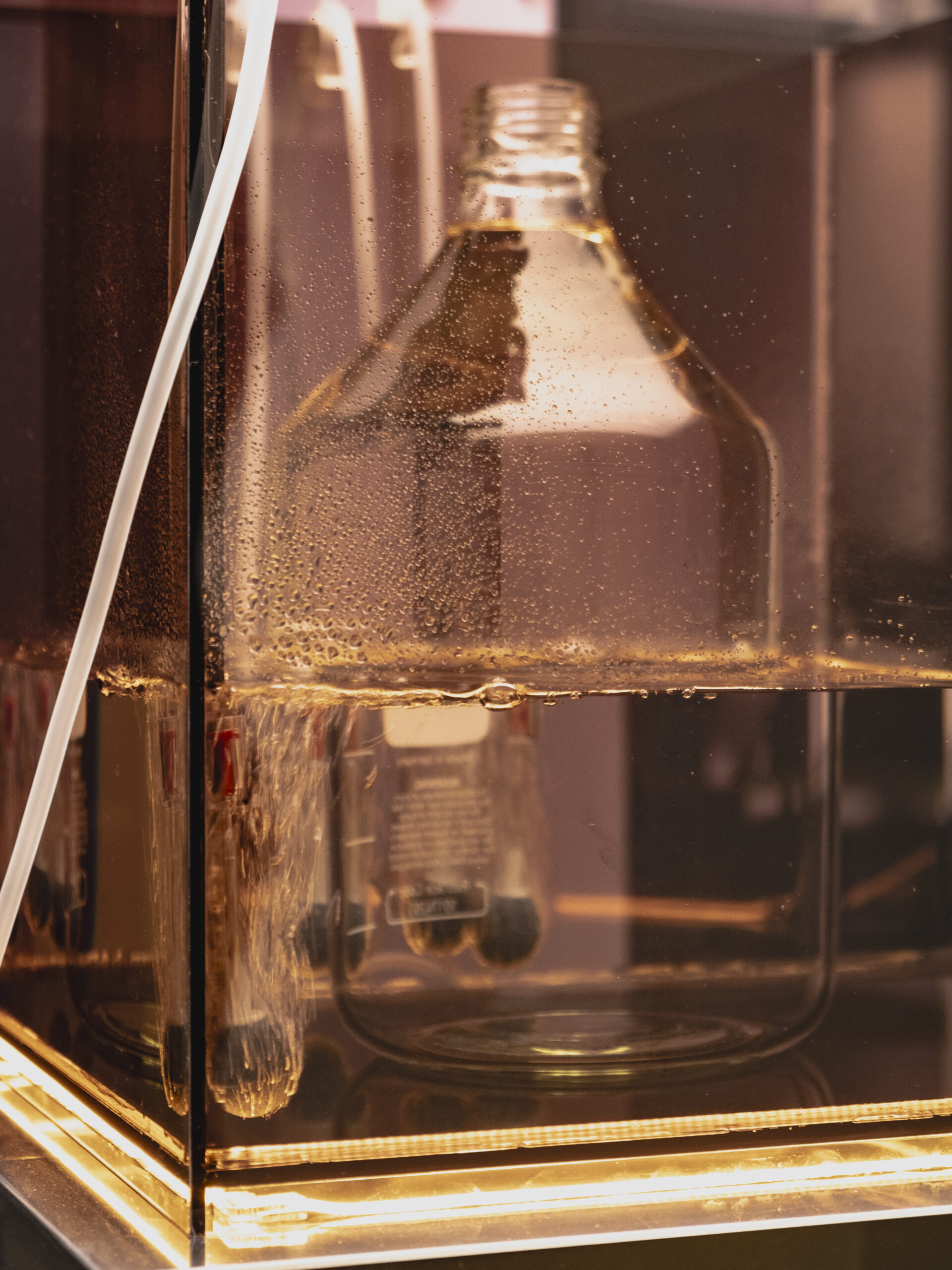
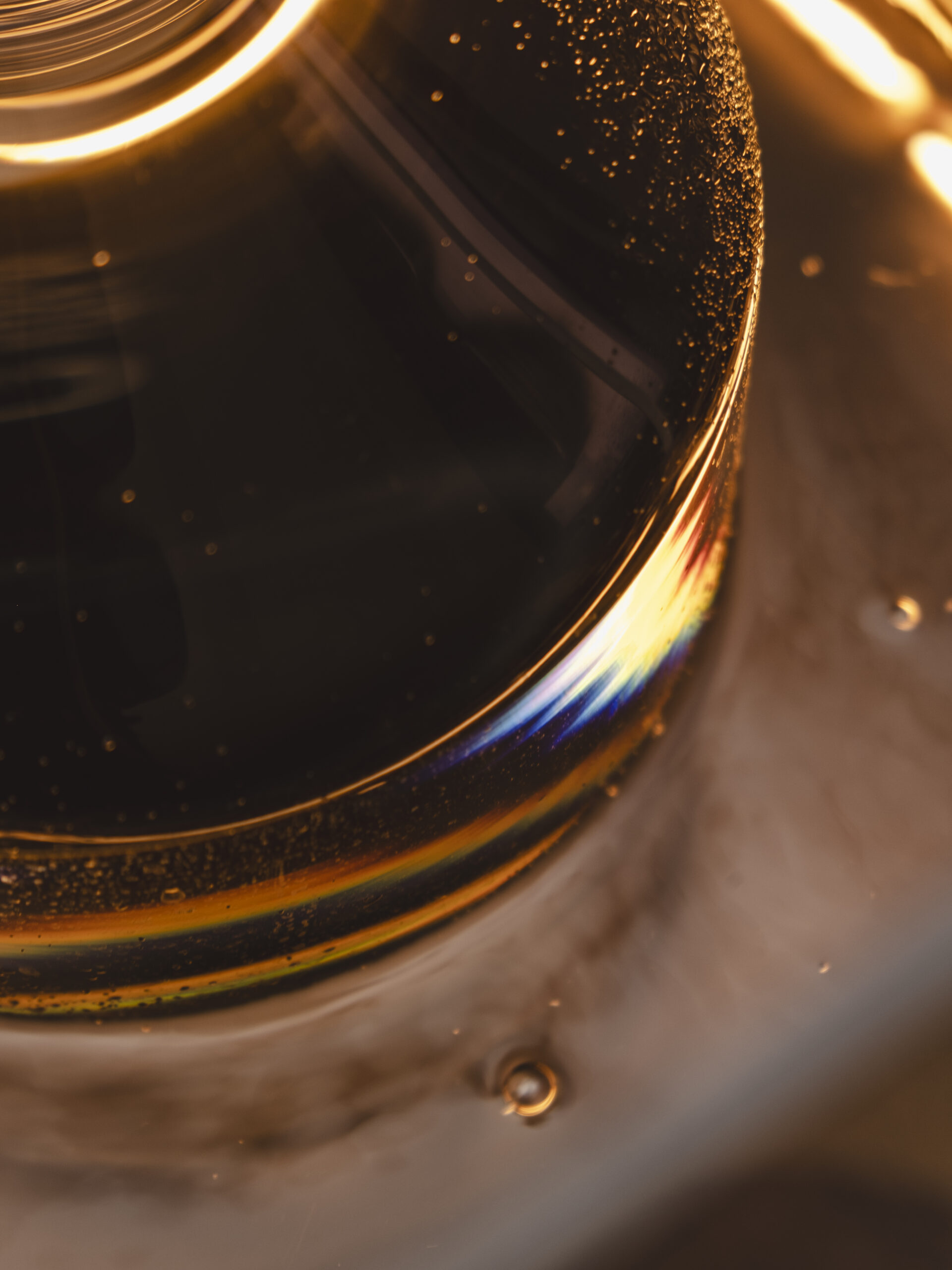
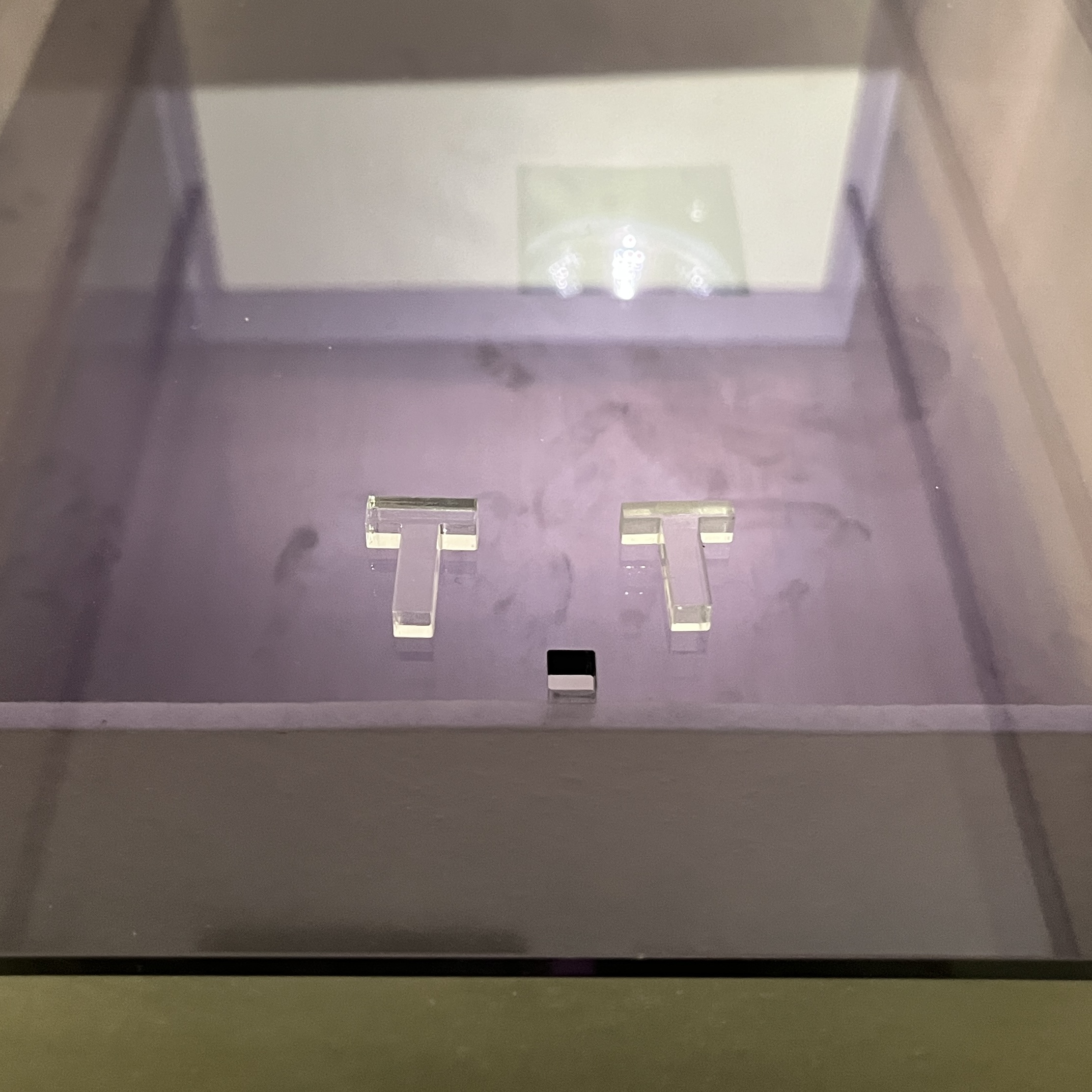
This is a piece embodying the process of perfume experimentation. Taking inspiration from Kogetsudai (moon viewing platform) at Ginkaku-ji, this installation features an aquarium that reflects light, creating the effect of water spreading out. Visualising the process from flat surface to cube evokes a sense of time's passage. The fluidity of the liquid poured into the cube aids the viewer in recognising the transition from static surface to dynamic cube, while also generating prismatic light.
パリを拠点とする香水ブランドARPAの展示インスタレーションのデザインです。 ARPAは、 Aesopなどの香水を手掛けるフランス人調香師バーナベ・ フィリオン氏が設立した、 独創的な香水のブランドです。 彼らとしては日本で初めての展示でしたので、 会場には京都の祇園を選定していました。 そのため、 このプロジェクトでは、 ARPAと京都の両方の文脈を取り入れることと、 ARPAのブランドコンセプトである 「Synaesthesia (共感覚) 」 を空間的に体感させることの二つが重要でした。
まず、 ARPAを構成する文脈を辿ることからデザインを開始しました。 中でも、 ARPAの最初の展示会がハンス・ ホライン設計のレッティ蝋燭店で行われていることに着目しました。
彼がこの建築で革新的だったことの一つは、 光沢のある素材間の曖昧な反射によって、 鑑賞者が動く度に空間の輪郭が変化し、 15平米程度の狭小空間を拡大させたことだと捉えています。 ですので、 レッティ蝋燭店のような実像と虚像の交錯を現代的な方法で応答することで、 ARPAの文脈を取り入れることにしました。
次に、 実像と虚像の交錯により 「Synaesthesia (共感覚) 」 を発生させる方法を模索しました。 Synaesthesia (共感覚) とは、 何かの香りで音を感じたり、 逆に何かを聞いて香りを感じたりと、 異なる感覚が反応し合う現象のことです。 これには香水の香りの構成がヒントになりました。
香水の香りは揮発性の違いを利用し、 最初の香り (トップノート) 、 1時間前後の香り (ミドルノート) 、 2時間後以降の香り (ベースノート) 、 の三段階から成ります。 同様に、 空間的な特性の異なる素材を三段階に重なり合わせることで、 実像と虚像の視覚的な交錯が、 嗅覚や聴覚の類似した交錯の記憶を刺激し、 香りや音を鑑賞者に感じさせます。
三種類の素材には、 全透過で中反射率の有色アクリル、 半透過で低反射率のファイバーグラス、 無透過で高反射率のステンレス鋼、 が最適でした。
最後に、 京都の東山地区の遺構を引用しながら、 素材の重なり方をいくつか検討しました。 結果として、 4つの什器によって空間を構成しました。
1. 嗅覚の棚 (Olafactory Cabinet)
Arpaの商品を置くメインとなる什器です。 違い棚を引用し、 正面から見た際に3種類の材料が縦方向に積層して見えることで、 商品の香りのシークエンスを視覚化します。
2. 標本の壁 (Specimen Wall)
マテリアル見本帳の役割を果たす什器です。 如庵の筋違いの囲いを引用し、 3種類の材料の板を手前から奥に透過率の順でならべることで、 空間に奥行きを与え、 限られた展示スペースを大きく豊かに見せることができます。
3. 記憶の引出し (Memory Drawers)
Arpaの記録を様々なアイテムで展示する什器です。 空也上人像のフラクタルを引用し、 3種類の材料でできた正方形断面を持つそれぞれの箱が貫通し合うことで、 下から照射する光にグラデーションを与えます。
4. 感覚のプリズム (Sensory Prism)
香料の実験の様子を体現した什器です。 銀閣寺の向月台を引用し、 光を反射しながら水が広がるような水槽のインスタレーションとしました。 素材の合わせ方は、 平面から立方体になるまでのプロセスを可視化することで、 時間の経過を感じさせます。 立方体に注がれた液体の流動性は、 鑑賞者が静的な面から動的な立方体への変化を認識する手助けになり、 プリズムの光を発生させます。
Snippets / Furniture, Installations, Sculptures
ARPA’s Institute of Synaesthesia
アルパの共感覚研究所